
How much rent to charge an adult child
Their pay and what they really cost at home in, a fair range and the reasoning out.
The short answer
How much rent should you charge an adult child?
There is no official figure. Most money guides land between 10% and 30% of the child’s take-home pay, and a fair number usually sits where that range meets what they really cost you.
-
1
Start from their pay
Charging a share of income keeps it fair as their pay changes. 10% suits a first job or a saver, 20% is a common middle, and 30% is the upper end, the level at which housing starts to squeeze any budget.
-
2
Check it against real costs
Add up the extra food, bills and the room they use. If the share of pay is below that, you are subsidising them. That is fine, as long as you choose it.
-
3
Never above the market
Keep it under what a room nearby would cost. The point of living at home is to get ahead, not to pay a landlord’s price.
Where the numbers come from
- MoneyHelper (UK government-backed): suggests a fair contribution towards rent or bills, perhaps a percentage of their income, and a smaller or temporary one when income is limited.
- Comparis (Switzerland): says experts often recommend 10% to 20% of the child’s salary, agreed together.
- The Globe and Mail (Canada, 2026): quotes advisers suggesting a flat monthly amount for household costs, or a set share, such as 20%, of variable bills like groceries and electricity.
- US Department of Housing and Urban Development: treats a household paying more than 30% of its income for housing as cost-burdened. That is where this calculator stops.
Typical amounts
Three ways to set the amount
The right figure depends on what you want the money to do. These are the three approaches this calculator uses.
-

Cover what they cost
Their real costs, up to 30% of pay
The plainest approach: they pay for the food, bills and space they use, so the household budget is not stretched. Good when money is tight at home.
-
Teach budgeting
About 20% of pay
A fixed amount on payday, like real rent. They learn to plan around a bill that does not move, and still save the rest.
-

Help them save
10 to 15% of pay
A small, regular amount keeps the habit, while most of their pay goes to a deposit. Some parents also set part of it aside and hand it back.
Examples by income
Rent for an adult child, by take-home pay
What 10%, 20% and 30% of take-home pay comes to, per month and per week. Use any currency: the shares are the same.
| Take-home per month | 10% a month | 20% a month | 30% a month | 20% a week |
|---|---|---|---|---|
| 1,000 | 100 | 200 | 300 | 46 |
| 1,500 | 150 | 300 | 450 | 69 |
| 2,000 | 200 | 400 | 600 | 92 |
| 2,500 | 250 | 500 | 750 | 115 |
| 3,000 | 300 | 600 | 900 | 138 |
| 4,000 | 400 | 800 | 1,200 | 185 |
Check the column against their real costs. If 10% of pay doesn’t cover the extra food and bills, that is a choice to help them, not a mistake.
Board or rent?
Board in the UK and Australia, rent in the US
The same thing goes by different names, and the words hint at what is included.
-
Board (UK, Australia, New Zealand)
Paying board, or “keep”, usually means a weekly amount that covers the room, meals and bills together. It is a family arrangement, not a tenancy.
-
Rent (US, Canada)
In the US people say “charging rent” even at home. It often covers the room only, with groceries or a phone plan split separately, so agree on what is in it.
Whatever you call it, write down what it covers. “Board, 60 a week, includes dinners and bills, not the car” prevents most arguments.
Do parents pay tax on board?
In Australia, the ATO says board or lodging paid by a family member is a domestic arrangement, not rental income: you don’t declare it and can’t claim deductions. In the UK, HMRC has no guidance written for board from your own child; if it counts as letting a furnished room in your home, the Rent a Room scheme lets you receive up to £7,500 a year tax-free. This is general information, not tax advice.

What to include
Should rent include food and bills?
Board usually does. Here is what to count when you add up their real costs.

- ✓Food. The groceries they eat at home. A quick way: your food bill divided by the number of adults, or the change since they moved back.
- ✓Energy and water. Their share of heating, electricity, hot water and long showers. Usually the difference is larger in winter.
- ✓Internet and phone. A share of broadband and streaming, plus their phone if it is on your plan.
- ✓The room. A share of rent or mortgage, or what the room would earn if you let it. Many parents leave this out, which is a choice to help.
- ✓Not included. Their own transport, clothes, nights out and debts. Those are theirs to budget for.
Save it for them
The “keep it and give it back” approach
Some parents charge rent and quietly save part of it, then hand it back for a deposit, a car or a wedding.
It works when you do not need the money for the household and the child would not save on their own. They still learn to pay a bill on payday, and the savings are there when they move out.
Decide whether you tell them. A known savings pot motivates some children; a surprise works for others. Either way, keep it in a separate account so it does not drift into the food budget.
How to bring it up
Talking to your adult child about rent
The amount matters less than how it is agreed. Five steps that keep it calm.
-
1
Pick a quiet moment
Not in the middle of an argument about dishes. Say it is about planning, not about wanting them out.
-
2
Show the real costs
Open the bills together. Most young adults are surprised by what food and energy cost.
-
3
Agree the amount and the date
Payday is easiest. A standing order means nobody has to ask.
-
4
Write it down
Amount, what it covers, chores, and when you will look at it again. One page is enough.
-
5
Review it
Every six months, or when their pay changes. Lower it during job hunting, raise it with a pay rise.

Shared Expenses in Klusek
Share household costs without the awkward chats
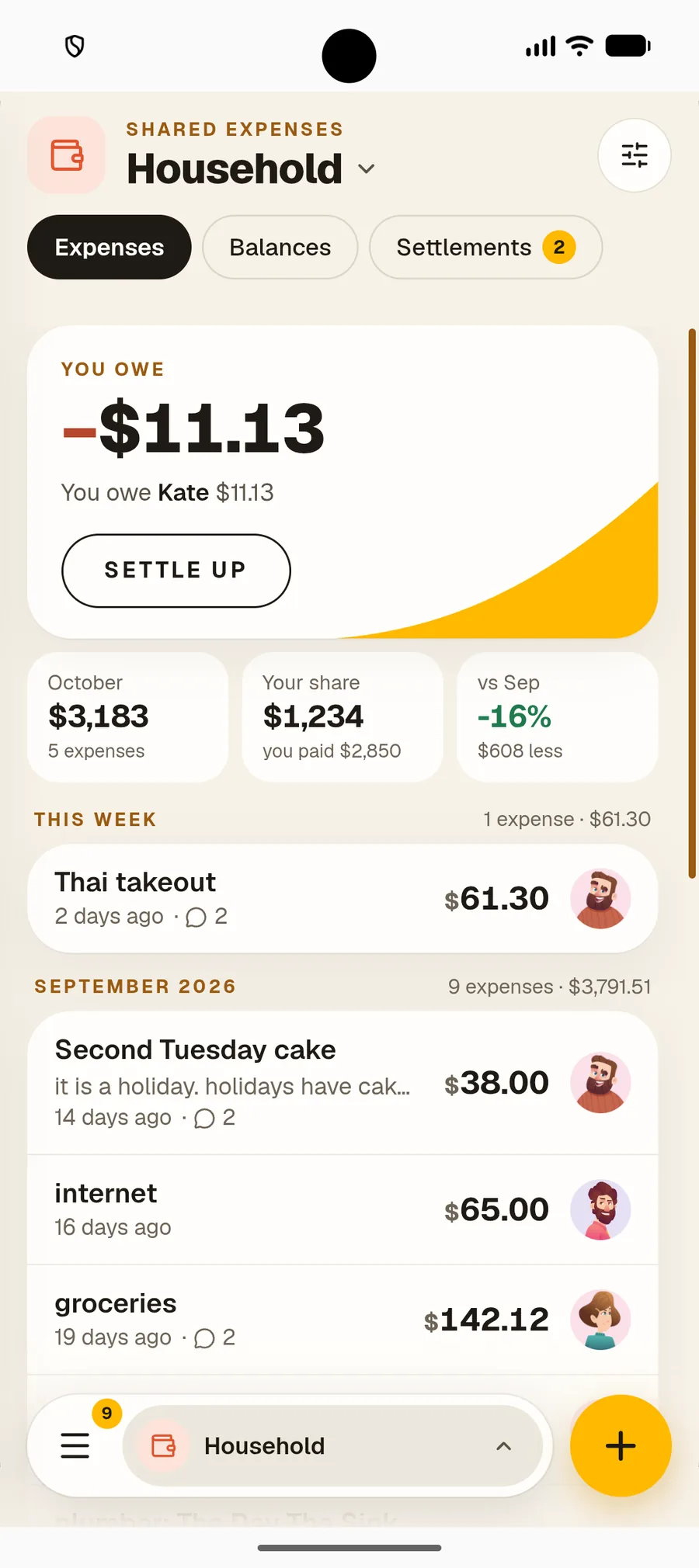
Once you agree on an amount, Klusek keeps the household’s bills in one place, so everyone sees what the home costs and who has paid what.
- ✓Add groceries, bills and rent as they come
- ✓Split equally, by percentage or by fixed amounts
- ✓One running balance of who owes whom
- ✓Shared shopping and to-do lists for the whole family
Free for yourself, no card needed. To share, only one of you needs Klusek Pass: $29.99 a year. Klusek for families →


Common questions
Rent for adult children: FAQ
Should I charge my adult child rent?
+
If they have an income, most money guides say yes, even a small amount. Paying their way builds the habit of a regular bill and makes living at home feel like a shared household. If they are studying, job hunting or on a very low income, a smaller amount, help around the house or a pause is reasonable.
How much rent should I charge my adult child?
+
A common guide is 10% to 30% of their take-home pay. Start with what they really add to the household (food, bills and their space), check it against that range, and keep it below what a room nearby would cost.
How much board should an 18 year old pay?
+
For an 18 year old in a first job or an apprenticeship, the lower end is usual: about 10% to 15% of take-home pay, often agreed weekly. On 400 a week take-home, that is 40 to 60 a week. If they are still at school or college with no income, many families charge nothing yet.
How much board should I charge in Australia?
+
There is no official rate. Australian families often agree a weekly figure that covers the room, meals and bills, and the same 10% to 30% of take-home pay guide applies. Enter their weekly pay and set the costs to per week to get a weekly board figure.
Is board from my child taxable?
+
In Australia, the ATO treats board or lodging paid by a family member as a domestic arrangement, not rental income, so you don’t declare it (and can’t claim deductions). In the UK, HMRC has no guidance written for board from your own child. If it counts as income from letting a furnished room in your home, the Rent a Room scheme lets you receive up to £7,500 a year tax-free, more than most board. Elsewhere, or if you are unsure, check with your tax office.
Should board include food?
+
In the UK and Australia, board usually covers meals and bills as well as the room. In the US, “rent” often means the room only. Either way, agree on what is included and write it down.
Should I charge rent if my child is a student?
+
Many parents don’t while a child studies full-time, or ask for a small amount from a part-time job. Asking for 10% of what they earn keeps the habit without getting in the way of their studies.
Is it a good idea to save their rent and give it back?
+
It can be, if you don’t need the money for the household. They learn to pay a bill on payday and get a lump sum for a deposit later. Keep it in a separate account and decide up front whether they know about it.
What percentage of income should an adult child pay to live at home?
+
Most guidance sits between 10% and 30% of take-home pay. Around 30% is where housing costs start to squeeze a budget, so higher than that rarely makes sense for someone living with their parents.
Does this calculator save my numbers?
+
Only on your device. The calculator runs in your browser and nothing is sent to us. Your numbers are kept in this page’s link, so you can share it, and in your browser so they are there next time.