klusek

Chore chart maker

Add people and chores, get a fair rotating chart to print. Free, no sign-up.

1. Who lives with you?

3 of 8 people

2. What needs doing?

Small is under 15 minutes, medium 15 to 45, large anything longer. Bigger chores count for more points.

  • On
  • On
  • On
  • On
  • On
  • On

Quick add

3. When does it start?

Every week on the chart runs Monday to Sunday.

Fair share

Who does how much

7points a week each, on average

  • John26 pts · 33%
  • Kate25 pts · 32%
  • Ania27 pts · 35%

7 chores over 4 weeks, 78 points in total. The gap between the busiest and the lightest person is 2 points, about one chore.

See the chart ↓

Everything happens in your browser. Your chart lives only in the link, never on our servers.

Tick chores off on your phone. Klusek’s To-do Lists give every chore an owner and a day, on everyone’s phone. See how →

Your chore chart

Chore chart

Nov 23 – Dec 20, 2026 · 3 people

    View
    Show
    Week Dishesevery day · small KitchenWed & Sat · medium BathroomSat · large Hallway and vacuumingSun · medium Take out the binsMon & Thu · small Water the plantsSun · small Clean the fridge1st Sun of the month · medium
    Week 1Nov 23 – 29 John×7 Kate×2 Ania Ania Kate×2 Ania —
    Week 2Nov 30 – Dec 6 Kate×7 Ania×2 John John Ania×2 John Ania
    Week 3Dec 7 – 13 Ania×7 John×2 Kate Kate John×2 Kate —
    Week 4Dec 14 – 20 John×7 Kate×2 Ania Ania Kate×2 Ania —

    ×2 means the chore is done twice that week. Tick a box each time the chore is done. Made with the free chore chart maker at klusek.app

    How it works

    How to make a chore chart in 3 steps

    A fair chore chart is not one where everyone does the same number of chores. It is one where everyone puts in about the same amount of work.

    1. Step 1

      List people and chores

      Write down everyone who lives with you and every chore, from dishes to the bathroom. Rooms work well as chores: kitchen, bathroom, hallway.

    2. Step 2

      Set how often and how big

      Pick every day, every week, every 2 weeks or once a month, and the days. Mark each chore small, medium or large.

    3. Step 3

      Get a rotating chart

      Chores are handed out week by week so the points even out and nobody gets the same job twice in a row. Print it or share the link.

    How chores are weighed

    Points = size (1, 2 or 3) × times the chore is done that week

    Dish duty every day is 7 small jobs, so 7 points a week. A bathroom clean once a week is 3 points. Without weights, “one chore each” would hand one person the dishes and another the bins.


    Worked example

    A chore rota for three roommates

    John, Kate and Ania share a flat. They have 7 chores, from daily dishes to a monthly fridge clean-out.

    In week 1 the chores go out biggest first. Dish duty is the biggest job of the week at 7 points, so it goes first, to John. Everyone else is still at 0, so the kitchen goes to Kate and the bathroom to Ania. The smaller chores then go to whoever has the fewest points at that moment.

    From week 2 every chore moves one person along: the dishes go from John to Kate, the kitchen from Kate to Ania, the bathroom from Ania to John. Every three weeks everyone has done every chore once. Over four weeks everyone ends up within 2 points of each other.

    Week 1, step by step

    Chore Points Before Goes to
    Dishes 7 0 · 0 · 0 John
    Kitchen 4 7 · 0 · 0 Kate
    Bathroom 3 7 · 4 · 0 Ania
    Hallway and vacuuming 2 7 · 4 · 3 Ania
    Take out the bins 2 7 · 4 · 5 Kate
    Water the plants 1 7 · 6 · 5 Ania

    “Before” shows John · Kate · Ania’s points just before the chore is handed out.

    Quick reference

    How often to clean what

    Not sure how often a chore needs doing? Start here and adjust for your home. A flat of four needs the bins and the kitchen more often than a couple does.

    Chore How often Size
    Dishes and wiping counters Every day Small
    Take out the bins and recycling 1–2 times a week Small
    Kitchen: hob, sink, floor Every week Medium
    Bathroom: toilet, sink, shower Every week Large
    Vacuum the floors Every week Medium
    Mop the floors Every 1–2 weeks Medium
    Change the bedding Every 1–2 weeks Medium
    Dust shelves and surfaces Every week Small
    Water the plants Every week (check the soil) Small
    Clean out the fridge Once a month Medium

    Make it stick

    Tips for a chore chart that works

    A chart only helps if everyone actually follows it. These small habits make the difference.

    • Agree on what “done” means

      Does “bathroom” include the shower and the mirror? Write it down once. Most chore fights are about standards, not schedules.

    • Make it together

      Fill the chart in with everyone at the table. People follow a chart they helped make, not one handed to them.

    • Count the invisible jobs

      Buying toilet paper and noticing the plants are dry are chores too. Add them, so the person who remembers everything gets points for it.

    • Allow swaps

      Away for the weekend? Swap a week with someone. The chart is a starting point, not a contract.

    • Keep it where you see it

      On the fridge, by the door or in the group chat. A chart in a drawer is forgotten by Wednesday.

    • Check in after a month

      Some chores turn out bigger or smaller than you guessed. Change the sizes, make a new chart and carry on.

    Alternatives

    Paper template vs chart maker vs app

    Three common ways to share chores, and when each one fits.

    What you need Blank template This chart maker Klusek app
    Free to use Yes Yes Free for yourself
    No sign-up Yes Yes No
    Fair split of big and small chores By hand Yes By hand
    Rotation for months ahead By hand Yes No
    Print and stick on the fridge Yes Yes No
    Everyone sees it on their phone No Link only Yes
    Tick off what is done On paper On paper Yes

    Not sure the split at home is fair right now? Take the who does more housework quiz first. Setting up a new flat? The roommate compatibility test turns your answers into house rules.

    To-do Lists in Klusek

    Chores, shared

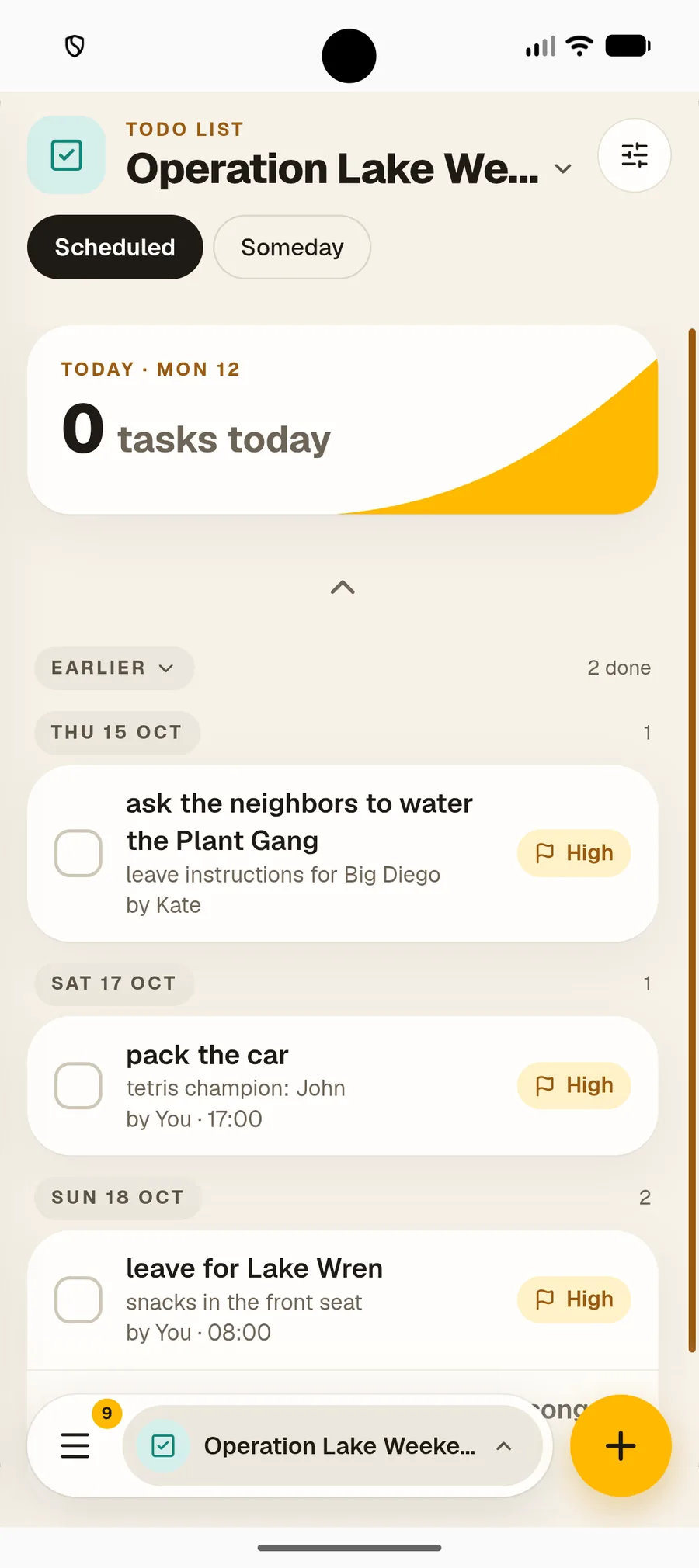
    A paper chart works until someone forgets to look at it. In Klusek every chore has an owner and a day on one shared list, on everyone’s phone, so nobody has to be the one who reminds the others.

    • Assign each chore to a person
    • Plan it for a day and see what is done
    • Shared grocery list for the weekly shop
    • Split bills and notes in the same app

    Free for yourself, no card needed. To share, only one of you needs Klusek Pass: $29.99 a year. Klusek for roommates →

    A shared to-do list in Klusek with chores assigned to each person and planned by day

    Common questions

    Chore charts: FAQ

    How do I make a fair chore chart?

    List everyone who lives with you, then every chore with how often it needs doing and how big it is. Give big jobs more weight than small ones, rotate chores so nobody is stuck with the bathroom forever, and check that everyone ends up with about the same total. This chore chart maker does the weighing and rotating for you.

    How does the chore chart maker decide who does what?

    Every chore gets points: its size times how many times it is done that week. In the first week the biggest chores are handed out first, each to the person with the fewest points so far, so the week is as even as it can be. After that every chore moves on to the next person each time it comes up. With three people, everyone does every weekly chore once every three weeks, so the totals come out the same.

    What do small, medium and large chores mean?

    A small chore takes under 15 minutes, like taking out the bins or watering the plants (1 point). A medium chore takes 15 to 45 minutes, like cleaning the kitchen or vacuuming (2 points). A large chore takes longer than that, like a full bathroom clean (3 points).

    Should chores rotate every week?

    Weekly rotation works for most homes. Everyone knows what is theirs for the week, nobody gets stuck with the worst job, and everyone learns how every chore is done. Daily chores like dishes rotate weekly too: one person has dish duty for the whole week, which is easier to remember than a new name every day.

    How do you split chores between two people?

    Add both of you and your chores. With two people the chart alternates every chore week by week, so over a month each of you does each chore about half the time and the points come out nearly equal. If one of you works much longer hours, it is fine to agree on a different split and adjust by hand.

    Can I print the chore chart?

    Yes. Press “Print chart” and your browser prints only the chart, in landscape, with a small box in every cell to tick off when the chore is done. You can also save it as a PDF from the print dialog and send it to everyone.

    Can I use it for a family with kids?

    Yes, but the maker shares points evenly between everyone in the list. For young children it works better to make a separate chart with only the chores that suit their age, and keep the grown-up chores on another chart.

    Does this chore chart maker save my chart?

    No. Everything runs in your browser and nothing is sent to us. Your chart lives only in the page address, so you can copy the link and send it to the group chat, and anyone who opens it sees the same chart.

    Is there an app for shared chores?

    Yes. Klusek’s To-do Lists give every chore an owner and a day on a shared list that everyone sees on their own phone, so you can tick chores off as you go instead of on paper.