


"Is your brother coming, then?" "I think so. Probably. He said maybe." "With the new girlfriend?" "...I'll ask." A Christmas dinner guest list is a funny thing: it's only ten or twelve names, and yet it lives in three group chats, two phones and one person's memory. Writing it down in one place, with RSVPs, plus-ones and diets next to each name, takes half an hour and saves a lot of "wait, who said what?".
Here's how we'd do it, with a guest list template and a short dietary requirements form you can copy.
Start the Christmas dinner guest list early
Mid-November is a good time. Families make plans earlier than you'd think, and the in-laws may be deciding between your table and someone else's right now.
Write down everyone you'd like to ask, then sort them gently:
- Definitely coming (they live with you, or they always come)
- Invited (you've asked, they haven't answered)
- Considering ("we'll let you know after we talk to Mum")
- Not this year (no hard feelings, they're at the other side of the family)
That's really all an RSVP is. Once you can see the four groups, you know roughly how many chairs, plates and potatoes you need, even before everyone has answered.
Plus-ones, children and the people nobody mentioned
Plus-ones are where Christmas numbers quietly grow. A new partner, a friend who'd otherwise be alone, a baby who doesn't need a chair but does need a high chair. Add a line for each of them as soon as you hear about them, even before you know their name. "Tom's plus-one" is a perfectly good entry.
It also helps to note who is an adult, a child or a baby. Children's portions are smaller, babies bring their own food, and the table plan changes when you need space for a high chair.
Count the plus-ones early. They're always the reason you run out of roast potatoes.
The dietary requirements form (copy and send)
Send this a few weeks before, as a message or an email. It's friendlier than asking on the day, and people really appreciate being asked.
Hi, we're so happy you're coming for Christmas dinner.
A few quick questions so we can plan the food:

1. Who's coming with you? (names, and ages for children)
2. Any allergies we should know about? (nuts, gluten, dairy, shellfish...)
3. Any foods you don't eat? (vegetarian, vegan, no pork, halal...)
4. Anything you really dislike? (no judgement, sprouts included)
5. Is there one dish that makes it Christmas for you?
6. Anything we can help with? (stairs, a quiet room, an early night for kids)

No need to answer everything, just what matters to you.
Question five is our favourite. It turns a practical form into a small kind thing, and you'll learn that someone's whole Christmas depends on bread sauce.
For allergies, ask clearly and write the answer down next to the name. When someone says "a nut allergy", check whether it's mild or serious, and keep the packaging for anything you buy so you can check the label later.
A simple guest list template
If you'd rather use paper or a spreadsheet, these columns are enough:
Name | Adult / child / baby | RSVP | Plus-one | Diet & allergies | Bringing | Notes
And a filled-in line, to give you the idea:
Aunt Margaret | Adult | Confirmed | No | Vegetarian | Trifle | Needs a chair with arms
The "Bringing" column is a gift. When guests offer to bring something, write it down straight away, or you'll end up with three trifles. Our Friendsgiving potluck sign-up sheet has a ready-made list of dishes if you'd like to share the cooking this way.
When do you need an answer by?
Gently ask for RSVPs by the first week of December. That gives you time to order the turkey, borrow chairs and plan the food shop. A kind reminder a few days before works wonders: "just finalising numbers for the turkey, are you two still coming?".
If you're doing this for the first time, our guide to hosting Christmas for the first time picks up from here, with the week-by-week plan. And when the guest list is done, the Christmas dinner checklist turns the numbers into a shopping list.
How Klusek helps with the guest list
In our flat, the Christmas guests live in Klusek's Guest List, and we share it with whoever is co-hosting. Each guest gets an RSVP: considering, invited, confirmed or declined. You can add a plus-one before you know their name, mark adults, children and babies, and use tags for diets like "vegetarian" or "gluten-free", then filter the list by tag when you plan the menu.
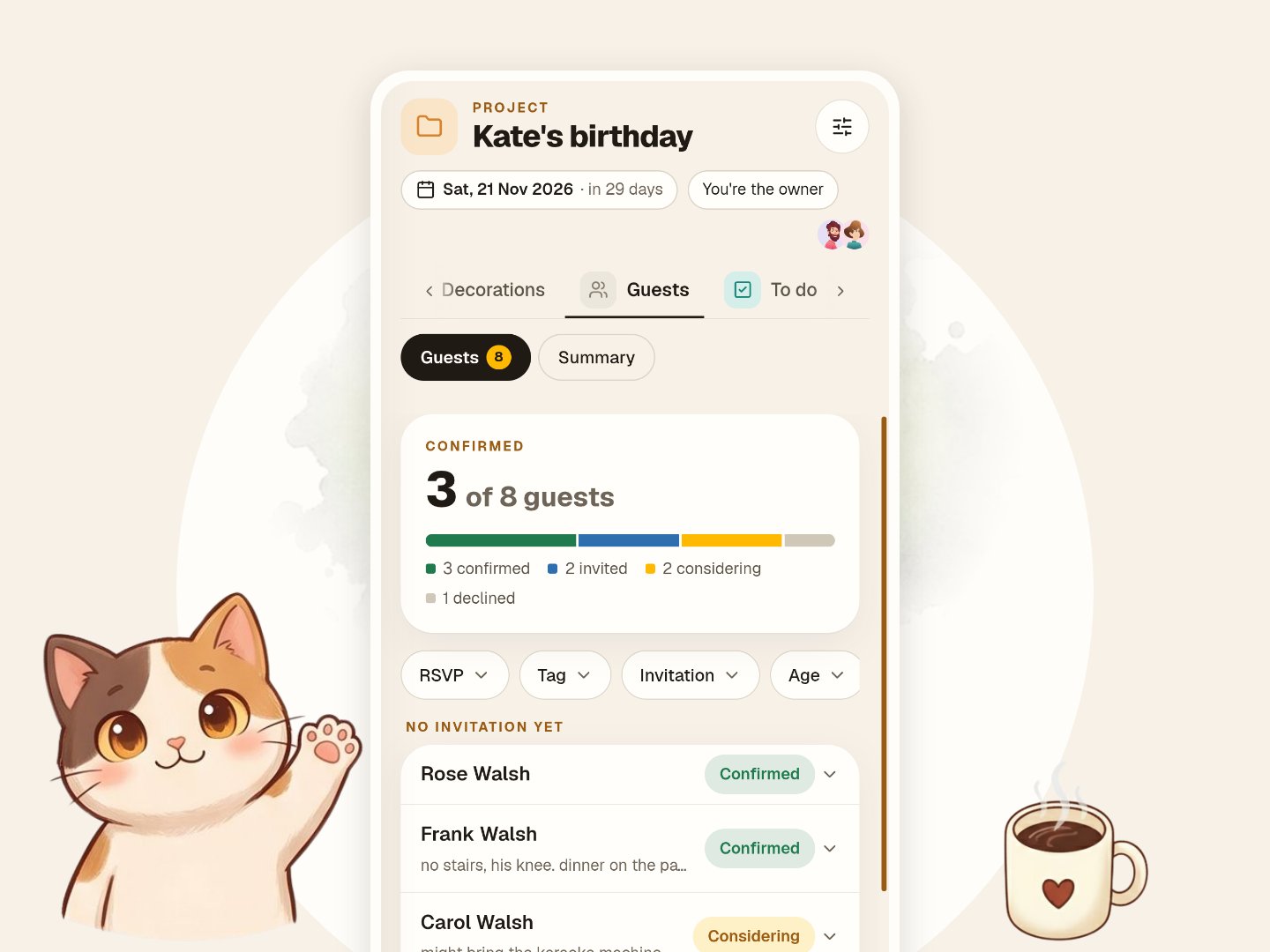
Invitations group people who come together, like a couple or a whole family, so one invite covers the lot. And the little note under each name is where "no stairs, his knee" goes, so whoever sets the table knows.
Klusek is free when you use it on your own. To share the guest list with your partner or family, one of you needs a Klusek Pass, and the people you invite join for free. There's more on Klusek for families if you're planning with the whole clan.
A last thought for the host
A guest list isn't really about numbers. It's a list of people you'd like around your table, and the fact that you're thinking about their allergies and their favourite dish says a lot about you. So send the form tonight, make a cup of tea, and let the answers roll in.