


You're brushing your teeth one evening in late November when your brain hands you a list: the cards, the present for your partner's dad, the turkey order, whether anyone has checked the fairy lights. A Christmas planning checklist takes all of that out of your head and puts it somewhere you (and the people you live with) can see it. Below is the full list, split into a timeline from mid-November to New Year, ready to copy.
Take what you need, skip what you don't. Nobody does all of it, and that's exactly how it should be.
Start with the big four
Before the to-do list, settle these. Everything else hangs off them.
- Where and with whom. Hosting, visiting, or a bit of both? If you're juggling two families, decide that first.
- The budget. One number for the whole season: gifts, food, travel, going out. Split it into rough pots so January isn't a surprise.
- The guest list. Who's coming, when, and any diets or plus-ones.
- Who does what. Hand out whole jobs between the people you live with: one of you owns gifts, one owns food, one owns decorations.
Once the list is shared, Christmas stops being one person's project and becomes everyone's.
The Christmas planning checklist (copy and paste)
Mid-November: six weeks out
- Decide where you'll be on Christmas Eve, Christmas Day and Boxing Day
- Set the overall budget
- Make the guest list and send invitations
- Ask about diets and allergies
- Start the gift list: name, idea, budget, bought yes/no
- Organise Secret Santa if your family or office does one
- Book any travel, especially trains
- Check the dates for last posting days with your postal service
Late November: five to four weeks out
- Order the turkey or main
- Book a supermarket delivery slot, if you use one
- Buy and write Christmas cards
- Buy gifts that need posting
- Plan the menu for the big day and the days around it
- Book any restaurant meals or nights out
- Find the decorations and test the fairy lights
Early December: three to two weeks out
- Put up the tree and decorations
- Finish most gift shopping
- Buy wrapping paper, tape, tags (and hide the scissors where you'll find them)
- Post cards and parcels
- Borrow extra chairs, plates and glasses
- Buy food that keeps: tins, jars, pudding, drinks, crackers
- Confirm numbers with guests
The week before Christmas
- Wrap the presents
- Write the full food shopping list and share it
- Clear the fridge and freezer
- If the turkey is frozen, move it to the fridge in time (it can take days)
- Check the bin collection dates over the holidays
- Plan the oven timings for the day
Christmas Eve
- Fresh food shopping, early
- Peel the veg, make anything that can be made ahead
- Lay the table
- Stockings, if you do them
Christmas Day
- Follow the oven plan
- Hand out drinks, washing-up and table jobs
- Sit down. Really.
Boxing Day to New Year
- Leftovers into the fridge within a couple of hours
- Settle up any shared costs
- Write down gifts received for thank-you notes
- Return borrowed chairs
- Recycling and the extra bin bags
- Note what worked for next year
Your Christmas to-do list, shared
A Christmas to do list works best when everyone can see it and tick things off. Pin it on the fridge, keep it in a shared note, or use an app. What matters is that "did anyone order the turkey?" has a clear answer.
If this is your first time hosting, our guide to hosting Christmas for the first time goes deeper into the big day itself. The Christmas dinner checklist breaks the food and kit into a full shopping list, and our Christmas dinner guest list post has a dietary requirements form you can send.
A Christmas planning timeline for busy people
If the full list feels like a lot, here's the short version:
- Mid-November: where, who, budget
- Late November: turkey, travel, cards
- Early December: gifts and decorations
- The week before: food and wrapping
- After: settle up, say thank you, rest
How Klusek helps us plan Christmas
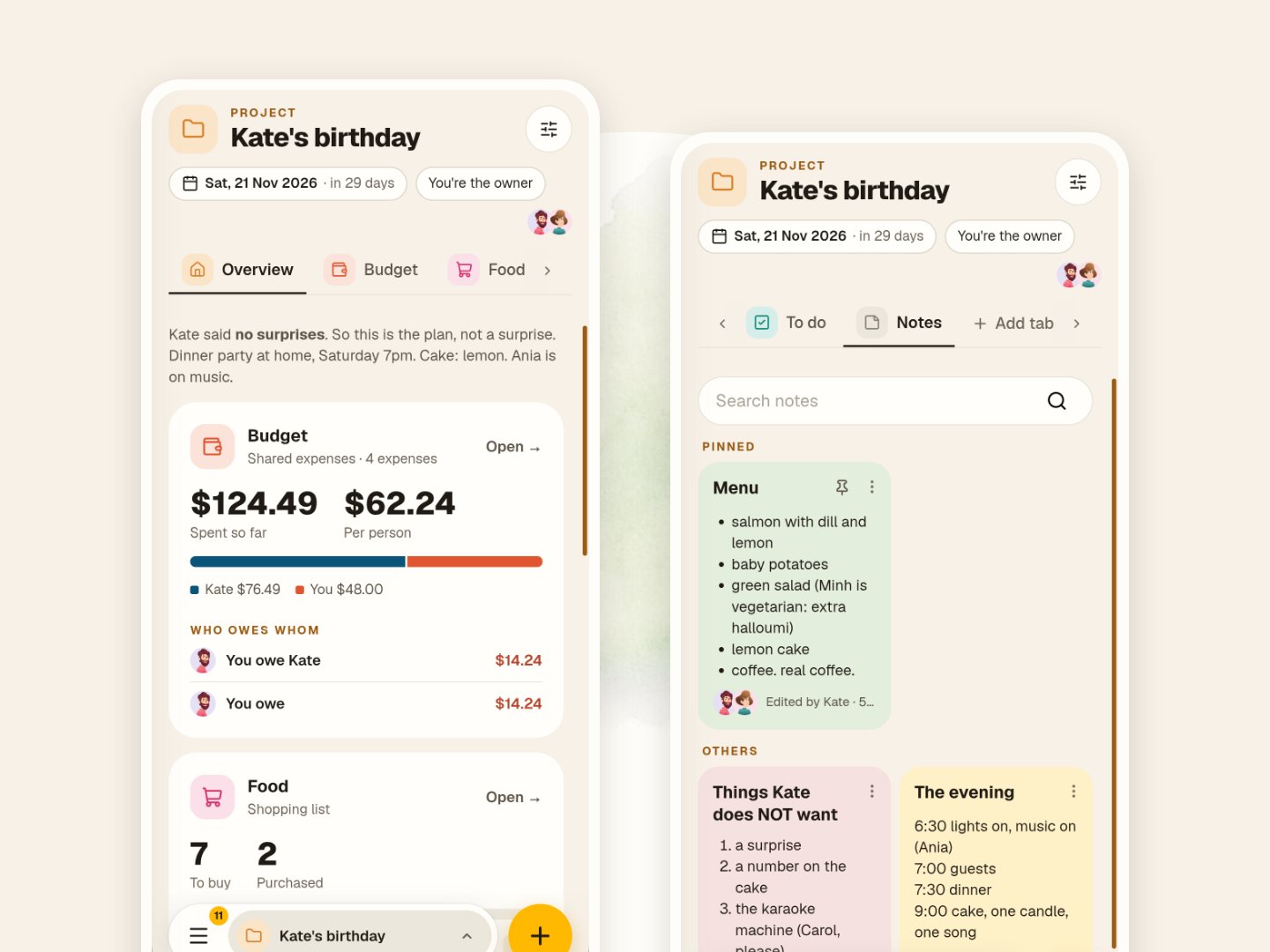
In our flat, the whole of Christmas lives in one project in Klusek. We add the tabs we need (a budget, the food shopping, the to-dos, the guest list and a few notes) and share the project once with everyone helping. They get every tab inside it, including ones we add later.
The first tab is the Overview, and it's our favourite: what's been spent and who owes whom, how many things are left to buy, who's coming and what still needs doing, all on one screen. The notes tab holds the menu and the plan for the evening, so nobody has to ask twice.
Every module is free when you use it on your own. Projects and sharing come with a Klusek Pass, $29.99 a year, and the people you invite join for free. New accounts get the first 30 days free, no card needed.
Make it yours
Christmas doesn't have to be big to be lovely, and nobody gets a medal for doing every item on the list. Copy the checklist, cross out half of it, and share the rest with the people you're celebrating with. Then put the kettle on and leave a little room in December for doing nothing at all.