
Nobody can share a job they can't see, which is why "Is there anything I can do?" is such a hard question to answer. Your partner means it kindly, and the honest reply is everything, but none of it is written down. This mental load checklist for couples is the written-down version: 70 everyday tasks, the visible and the invisible, so the two of you can look at the whole picture together.
One small promise before the list. This isn't a scorecard. Nobody wins. It's a map of your home, and most couples who go through it end up surprised, a bit impressed by each other, and laughing at least once about who actually knows where the spare batteries are.
How to use this mental load list of tasks
Grab a drink, sit somewhere comfy and go through it together. For each task, just mark one of three things:
- Me: I usually notice it, plan it and do it.
- You: you usually do.
- Us / nobody: we share it, or honestly, it falls through the cracks.
Mark who notices and remembers, not only who does the job. That's the mental load part: carrying the reminder around in your head. Skip anything that doesn't apply to your home. No pets, no kids, no garden? Lucky you, fewer lines.
The point isn't to count. It's to see the list, so it stops living in one person's head.
The mental load checklist for couples (70 tasks)
Copy it, print it, or paste it into a shared note.
Food and the kitchen
- Noticing what's running low
- Writing the shopping list
- Doing the weekly shop
- Planning what's for dinner this week
- Knowing what's in the fridge and what needs eating first
- Cooking on weeknights
- Packing lunches
- Remembering who doesn't eat what
- Emptying and loading the dishwasher
- Cleaning out the fridge
Cleaning and laundry
- Noticing when the bathroom needs a clean
- Cleaning the bathroom
- Vacuuming and mopping
- Changing the bedding
- Doing the laundry, start to finish
- Putting clean laundry away
- Knowing what can't go in the tumble dryer
- Buying cleaning supplies before they run out
- Taking the bins out on the right day
- Remembering when the bin day moves for holidays
Money and paperwork
- Paying the rent or mortgage
- Keeping track of bills and due dates
- Knowing who owes whom for shared things
- Checking bank statements
- Renewing insurance (home, car, travel)
- Comparing energy or phone deals
- Keeping important documents where you can find them
- Remembering when passports and ID expire
- Filing taxes or any forms that need doing
- Cancelling subscriptions nobody uses
The home itself
- Noticing when something breaks
- Booking repairs and being in for them
- Booking the boiler or heating service
- Replacing light bulbs and batteries
- Changing the smoke alarm batteries
- Knowing where the spare keys are
- Keeping the toolbox stocked
- Sorting the post
Calendar and people
- Running the shared calendar
- Remembering birthdays
- Buying and sending gifts and cards
- Planning date nights
- Keeping in touch with each other's families
- Organising visits and who's staying over
- Planning holidays and booking them
- Planning the holiday season (who goes where, and when)
- Replying to invitations
- Writing thank-you messages
Health and wellbeing
- Booking doctor and dentist appointments
- Remembering prescriptions and refills
- Keeping the first aid kit and medicine stocked
- Noticing when one of you needs a rest
- Booking eye tests and check-ups
- Planning exercise or walks together
- Keeping the vitamins and painkillers topped up
Pets, plants and outdoors
- Feeding the pets
- Booking vet visits and jabs
- Buying pet food before it runs out
- Watering the houseplants
- Looking after the garden or balcony
- Organising pet care when you're away
- Asking someone to water the plants when you travel
Kids, if you have them
- Knowing what's happening at school this week
- Signing forms and paying for trips
- Booking clubs and activities
- Arranging childcare and babysitters
- Organising playdates and birthday parties
- Buying clothes and shoes when they've outgrown them
- Packing bags for school, sport and sleepovers
- Remembering the dress-up days and bake sales
What to do with your mental load household checklist
Once you've gone through it, look at the results without judging them. Some things will be very "you", some very "them", and a few will be "honestly, nobody". Then:
- Say thank you first. You'll each find things the other does that you never noticed. It's a nice moment; let it be one.
- Hand over a few whole jobs. Pick two or three lines and move them over completely, noticing and remembering included. "You own the bins" means no reminders on Tuesday.
- Fix the "nobody" lines. Give each one a name or a date.
- Write it down where you both look. Lists in one head are where the mental load lives.
- Check in after a month. Five minutes, over a cup of tea. Swap what doesn't work.
If you'd like a lighter way in, try our who does more housework quiz together. It weighs chores by time and shows the invisible work separately, and you can each answer from your side and compare. If you're still wondering whether any of this applies to you, our post on mental load signs is a good place to start, and how to divide chores with your partner helps with the next step.
How Klusek helps
In our home, the lines from this list that come back every week live in a shared to-do list in Klusek. Each job gets a day, like the bins on Tuesday, so it sits on that day where you both see it, and you add next week's when you plan the week. Put a name in the job, like "Bins (Tomek)", or leave it for whoever gets there first, and every ticked-off to-do shows who did it, so nobody keeps score in their head.
Sharing it is simple: you invite your partner to the list, and from then on you both see the same chores, live.
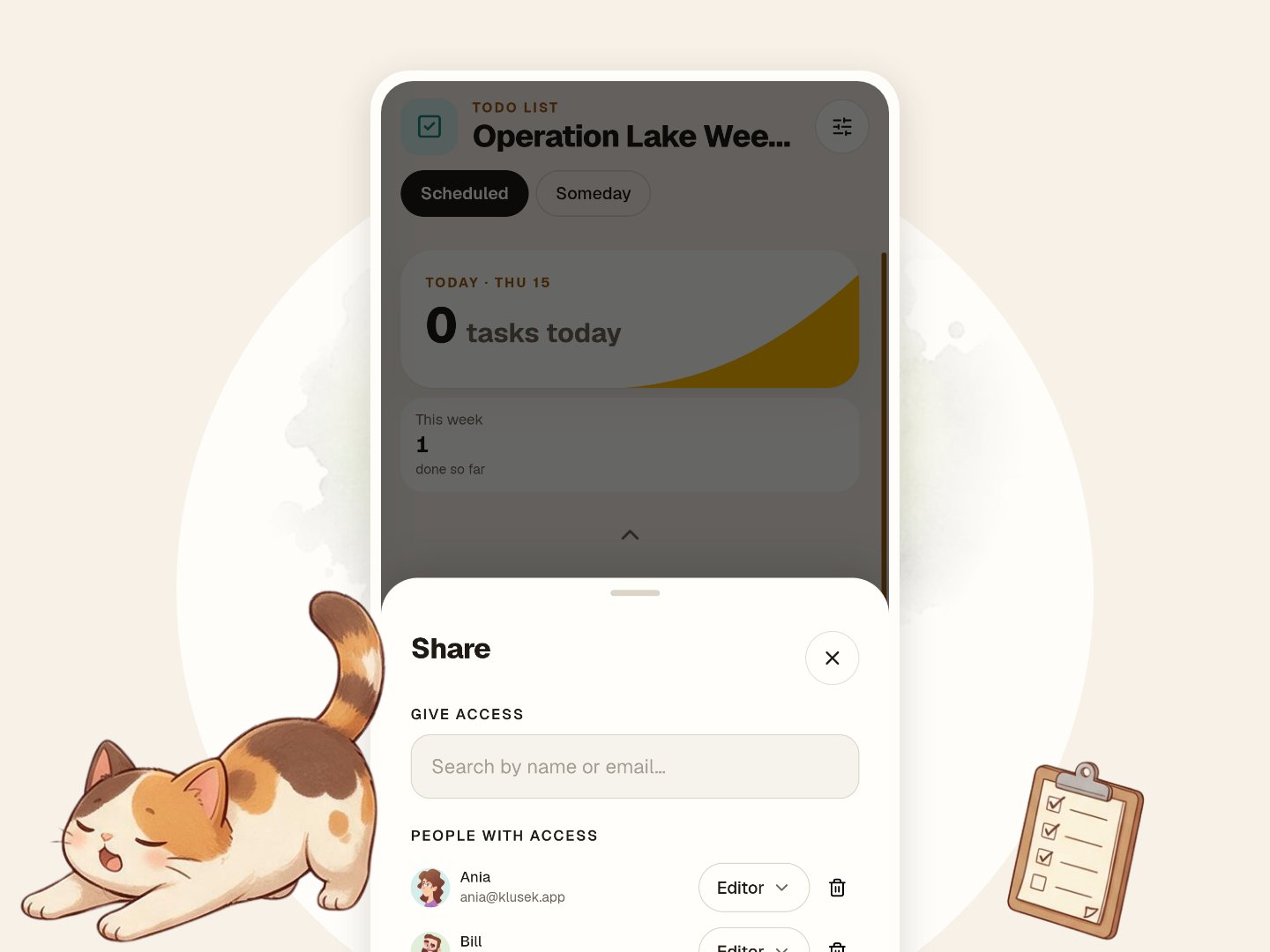
Klusek is free when you use it on your own. To share a list with your partner, one of you needs a Klusek Pass, and the person you invite joins for free. No streaks, no points, no badges. There's more for two on our page for couples.
For the one who's been carrying the list
If you read all 70 lines and recognised most of them as yours, that's a lot, and it's okay to feel tired just looking at it. Show the list to your partner tonight. You don't need to say much. Most people take one look, go a bit quiet, and then ask which ones they can have.