
Two cartons of milk in the fridge, both bought today, an hour apart. Not a single egg in the house. A shared shopping list is the simple fix: one list that everyone in the home can see and edit, where you add things the moment they run out and tick them off in the shop. Do it well, and the milk-twice moments mostly disappear.
And you get to stop texting "do we need anything?" from the shop every time.
Why the milk gets bought twice
It almost never happens because someone wasn't paying attention. It happens because the list lives in more than one place. A bit of it is on the fridge, a bit is in your head, a bit is in a message from Tuesday, and your partner has their own version too.
So both of you notice the milk is low, both of you are being helpful, and both of you buy it. Lovely intentions, two cartons.
The best shopping list is the one that exists in exactly one place, and everyone knows where that place is.
What makes a shared shopping list actually work
A list everyone can see is the start. These small habits make it stick:
- Add it the moment it runs out. Not later, not "when I make the list". The last teabag goes, the teabags go on the list.
- Write the amount. "Tomatoes" is a guess. "6 tomatoes" or "500 g mince" isn't, and nobody has to text to ask.
- Group by category. Fruit and veg, bakery, dairy, cleaning. You walk the shop once instead of doubling back for the butter.
- Say who's buying. If you're both going out, split the list. You take the big shop, they grab the bread on the way home.
- Tick things off in the shop, not at home afterwards. That's how the other person knows it's done.
- Use a note for anything specific. "The oat milk in the blue carton" saves a confused phone call from aisle seven.
How to share a grocery list with your partner
If it's just the two of you, a shared grocery list for couples is wonderfully simple. Here's how we'd set it up:
- Pick one place for the list. A whiteboard on the fridge, a shared note or a shopping list app. The only thing that matters is that you both use the same one.
- Move everything into it. Clear out the old notes and messages so there's no second list hiding somewhere.
- Agree on two small rules: add it when it runs out, tick it off when it's in the trolley.
- Try it for two weeks. It feels a bit fussy for the first few days, and then it becomes the way your home works.
If one of you has always been the person who just knows what's in the fridge, this is also a gentle way to share that job. You might recognise a few things in the signs your home runs on one person's memory.
A shared family grocery list (with kids and teenagers)
With a family, the list gets busier, and that's a good thing. Let everyone add to it, including older kids. A teenager who writes "cereal (the good one)" on the list is a teenager who won't be sighing at the cupboard on Monday.
A few things help with bigger households:
- Keep separate lists for separate jobs: the weekly shop, the bathroom cupboard, the party next month.
- Let people add notes instead of messages. "For the school bake sale" next to the flour explains why there's suddenly flour on the list.
- Check the list together once a week, maybe on Sunday, to catch the big things before the big shop.
Sharing a home with flatmates instead? The groceries part of our guide on how to split bills with roommates covers who pays for what.
Paper, messages or an app?
All three can work, honestly.
A paper list on the fridge is lovely, until it's at home and you're in the shop. A shared note or a group message is better, but things get buried, nobody knows what's already been bought, and there's no "who's getting this?".
A shopping list app shows the same list on everyone's phone, live. You add oat milk on the bus, and it appears on the list your partner has open in the shop. For most couples and families, that's the point where the milk-twice problem stops.
How Klusek helps with this
In our flat, the shopping lives in a shared shopping list in Klusek. Everyone adds things the moment they run out, with a quantity and a little note if it needs one. Items group themselves by category, so the list follows the aisles, and you can filter it to show what one person is buying.
Every item shows who added it and when, so "who wanted rye flour?" answers itself. When something is in the trolley, you tick it off, and it moves to Purchased for everyone.
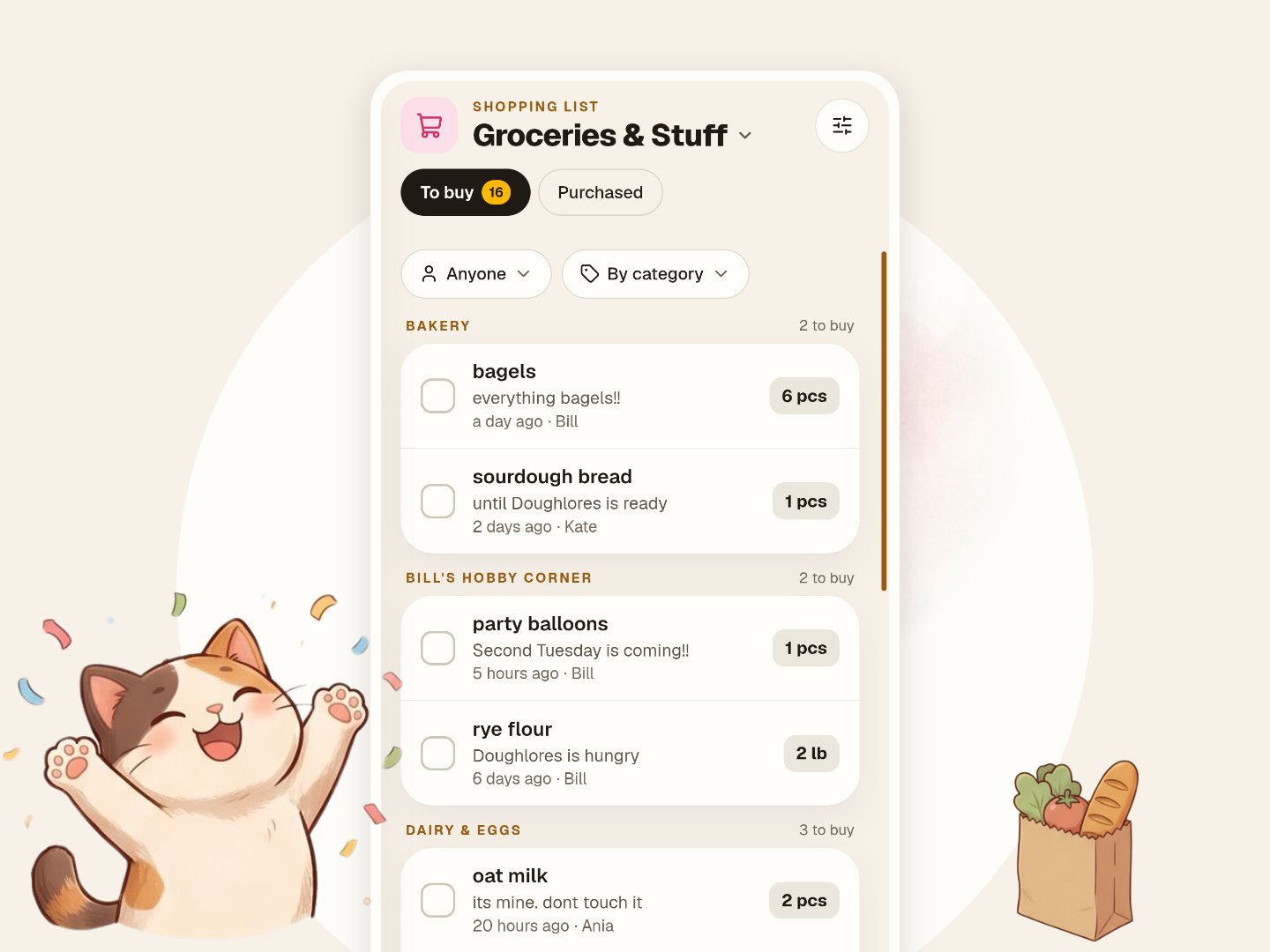
You can keep more than one list, like the weekly groceries, the bathroom cupboard and a party shop, each shared with different people. Klusek is free when you use it on your own. To share a list with your partner or family, one of you needs a Klusek Pass, and the people you invite join for free. There's more on how couples and families set it up.
One list, one carton
There's something quietly nice about a home where the shopping just works. You open the list, the eggs are on it, someone's already bought the bread, and the oat milk note makes you smile.
Set it up this week, together, and give it a fortnight. The next time you open the fridge, there'll be exactly one carton of milk in it.