

In winter, most houseplants need water about half as often as they did in summer, and sometimes even less. That's the honest answer to how often to water houseplants in winter: less often, and only when the soil tells you it's dry. So if your usual Sunday round with the can finds the monstera still damp from last week, it isn't asking for more. In winter you water by touch, not by the calendar.
That sounds vague, so let's make it practical.
Why houseplants need less water in winter
Most houseplants grow much more slowly from late autumn to early spring. The days are short, the sun sits low, and less light means less growth, so the roots take up less water. The soil stays wet for longer, and a pot that dried out in four days in July might take two weeks now.
The Royal Horticultural Society's January advice is short and clear: "Water houseplants sparingly. The compost should be barely moist in winter" (RHS, checked 23 October 2026). NC State Extension says much the same: winter watering "can be significantly reduced", and most plants do best when the soil nearly dries out between waterings (NC State Extension, checked 23 October 2026).
The most common way to lose a houseplant in winter is kindness. A little too much water, every week, in a pot that hasn't dried out.
When to water house plants in winter: check the soil
Before you water, check. It takes five seconds per plant:
- The finger test. Push a finger into the soil, about 2 to 5 cm (an inch or two). If it feels dry at that depth, water. If it's cool and damp, wait.
- The skewer test for big or deep pots. Push a wooden skewer down to the bottom and pull it out. Damp soil clinging to it means the roots are still wet.
- The weight test. Lift the pot just after watering and again a week later. You'll quickly learn what "dry" feels like.
Then, when you do water, water properly: until it runs out of the drainage holes, and empty the saucer after half an hour so the roots aren't sitting in a puddle.
How often to water houseplants in winter: a rough guide
Every home is different, so treat this as a starting point and always check the soil first:
- Cacti, succulents and aloe: very little. Every four to six weeks, or less in a cool room. The RHS suggests keeping cacti barely moist until spring.
- Snake plant and ZZ plant: only once the soil is completely dry, which is often every three to six weeks in winter.
- Pothos, monstera, rubber plant and spider plant: when the top few centimetres are dry, often every one to three weeks.
- Peace lily, calathea and ferns: they like moister soil, so let only the top dry out. In a warm, heated room that can still be about once a week.
- Moth orchids: a little less than in summer, but don't let the roots dry out completely. Often every week or two.
Notice how wide those ranges are. A pothos in a warm living room above a radiator will dry out far faster than the same plant in a cool spare bedroom.
Watering houseplants in winter: UK and US homes
Winter indoors looks a bit different on each side of the Atlantic, and it changes how fast pots dry.
In UK homes, radiators often sit right under the windowsill, which is exactly where the plants are. The air above them is warm and dry, so those pots dry faster than the rest. The windowsill itself can get very cold at night, too. The RHS warns against leaving plants behind the curtains on frosty nights, especially without double glazing. Pull them into the room in the evening.
In US homes, forced-air heating dries the air out. NC State Extension notes that most houseplants prefer 40 to 50% humidity, and suggests a humidifier, grouping plants together or a pebble tray. Keep pots away from the blast of a heating vent, which dries them out unevenly.
In both, the plant by the heat source might need water twice as often as the one across the room. That's normal.
A few more winter watering tips
- Use water at room temperature. Icy water straight from the tap can shock the roots.
- Water in the morning, so the surface can dry during the day.
- Skip the plant food. Growth is slow, so feeding usually isn't needed until spring. NC State suggests starting again in March or April.
- Give them the brightest spot you can. More light means more growth, and more growth means a steadier thirst.
We'll go plant by plant in the rest of this winter series, starting with the snake plant. And if the plants are one of many things you're quietly remembering for the whole house, the signs your home runs on one person's memory might sound familiar.
How Klusek helps with this
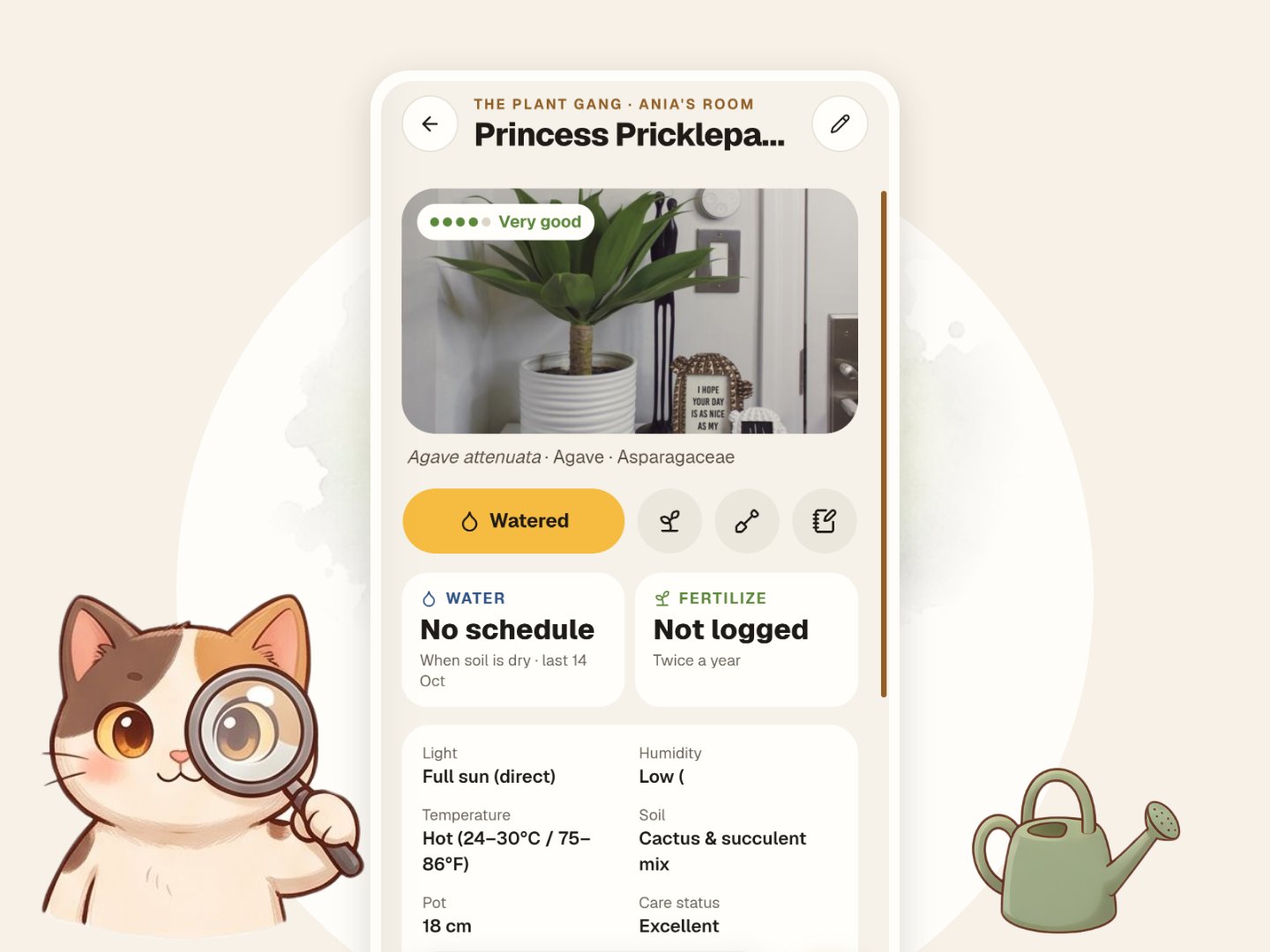
In our flat, every plant has its own page in Plant Care in Klusek. You can identify a plant with a photo, and its page keeps the name, a picture and care details like light, humidity, temperature and soil. Then you set how often it needs water, and Klusek shows which plants are due today.
When you water one, you tap "Watered", and it remembers the date. That's the part we love in winter, when the gaps get long and nobody can recall whether the agave had a drink two weeks ago or four.
If you share your plants with your partner or flatmates, everyone sees the same list and whoever waters ticks it off, so nothing gets watered twice. Klusek is free when you use it on your own. To share your plants, one of you needs a Klusek Pass, and the people you invite join for free.
Your plants are resting, and that's fine
If your plants look a bit sleepy in December, they're not failing. They're doing what plants do when the light goes. Water a little less, check the soil before you pour, and let them rest.
Come March, the new leaves will start again, and you'll be back to the summer rhythm before you know it.