
The group chat is buzzing. Someone found the perfect cottage for New Year's Eve: a log burner, a big kitchen, four bedrooms. Six of you are going, and two of you are couples. Then comes the quiet bit where everyone wonders, but nobody asks, how to split Airbnb cost with friends when a couple shares one room and a single friend has a room to themselves.
There's no single fair answer, but there are three good ones, and each is a fair way to split a vacation rental. The kindest thing you can do is pick one together before anyone books, so the money talk happens once, in a happy mood, and never again.
How to split Airbnb cost with friends: three fair ways
Let's use one example the whole way through. The cottage costs £1,200 for three nights (the maths works the same in dollars or euros). It has four bedrooms. Going: two couples and two single friends, so six people.
1. Per person
Everyone pays the same: £1,200 ÷ 6 = £200 each. Each couple pays £400 for their room, and each single friend pays £200.
Feels fair when: the rooms are similar, people are mostly in the shared spaces anyway, and it's a "we're all in this together" kind of trip.
2. Per room
Every bedroom costs the same: £1,200 ÷ 4 = £300 a room. Each couple pays £300 (£150 each), and each single friend pays £300.
Feels fair when: you're mainly paying for beds. Singles sometimes find it a bit steep, because they pay twice as much as a person in a couple for the same holiday.
3. A mix: half by room, half by person
Split the cost in two. £600 is shared by room (£150 a room), and £600 is shared by person (£100 each).
- Each couple: £150 for the room + £200 for two people = £350 (£175 each).
- Each single friend: £150 for the room + £100 = £250.
Check: 2 × £350 + 2 × £250 = £1,200. This middle ground is often the one everyone nods at, because a couple pays more than a single, but not double.
The fairest way to split a vacation rental is the one you agree on before anyone has seen which room has the en suite.
How to split Airbnb with couples: the awkward bits
A few situations come up on almost every group trip. Talk about them early:
- The big room. If one bedroom has an en suite or a sea view, it's fine to add a small extra for it, say £30, and take it off the others.
- Someone comes for fewer nights. Count person-nights instead of people. Someone staying two of three nights pays two-thirds of a person's share.
- Kids. Many groups don't charge for small children, or count them as half. Agree on it before the booking, not at the checkout.
- The sofa bed. Whoever sleeps on it usually pays a bit less. It's only polite.
Food, petrol and the rest of the trip
The cottage is usually the biggest bill, but not the only one. These are easiest to split per person, by who joined in:
- The big food shop and the drinks: split between everyone who's eating and drinking.
- Petrol (or gas), parking and tolls: split between the people in each car.
- A dinner out or a boat trip: split only between the people who went.
- The fireworks or the fancy bottle at midnight: whoever wants in, pays in.
Writing it down as you go saves a lot of guessing on the drive home. Our free split expenses calculator, a simple trip expense splitter, takes everyone's costs and works out the fewest payments to settle up, without anyone needing to install anything. And if your group has done a shared dinner before, our guide on how to split Friendsgiving costs has more tips for the food side.
Before you book: a quick money checklist
Copy this into the group chat:
Holiday cottage, before we book:
- Total price, including cleaning fee and any deposit: ___
- How we split it: per person / per room / half and half
- Who books and pays upfront: ___
- When everyone pays them back: ___
- What happens if someone has to cancel: ___
- Food and drinks: split by everyone who eats
- Travel: split by each car
The person who books often pays a big sum upfront, so it's kind to pay them back within a week or two, not after the trip. If someone has to drop out, agree in advance whether their share is refunded only if a replacement is found.
How Klusek helps with group trips
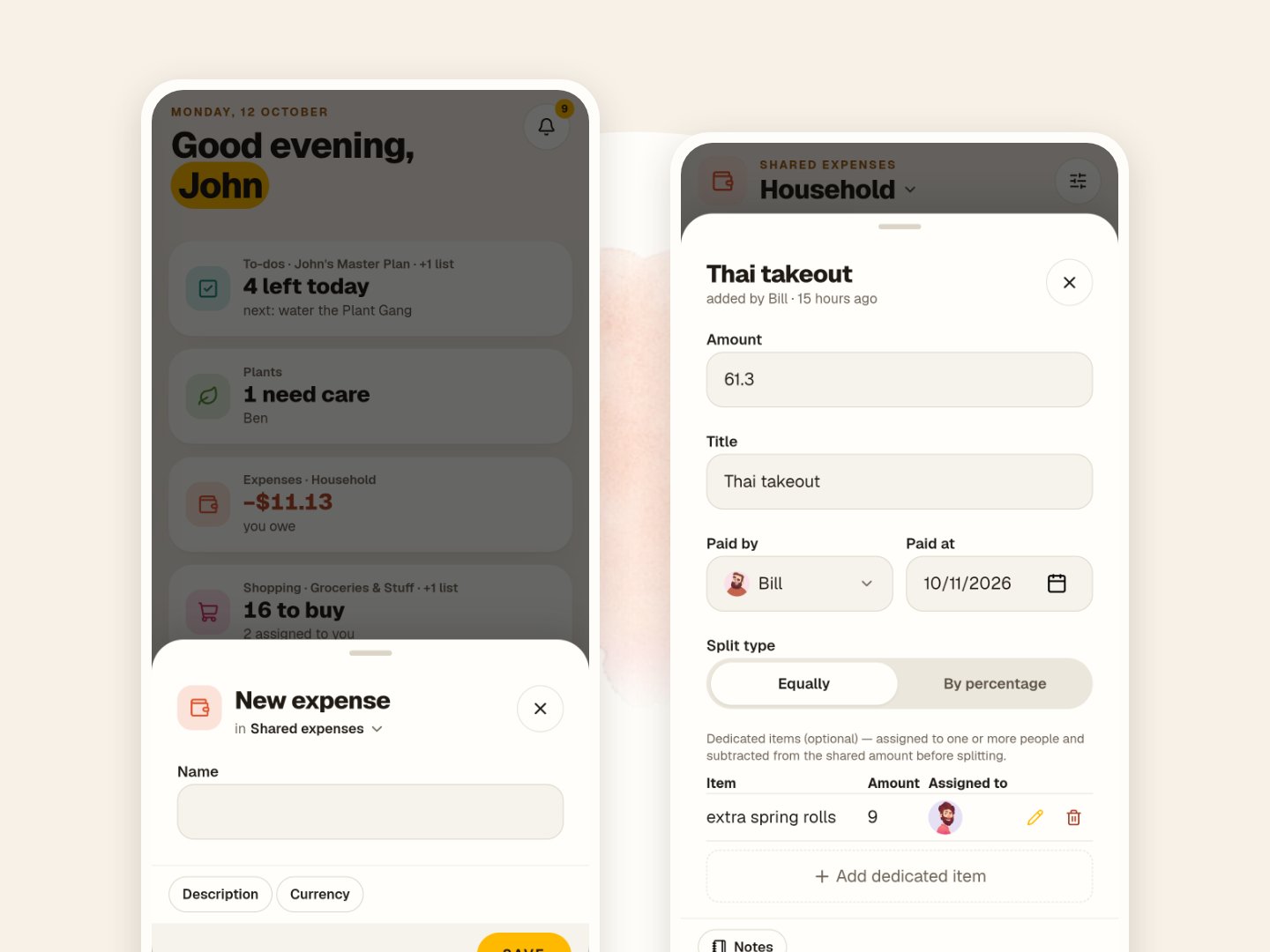
For a trip, we make a separate expense list in Klusek's Shared Expenses and invite everyone who's going. Whoever pays adds the expense with who paid and when, and splits it equally or by percentage. The per-room split above, for example, is just 12.5% for each person in a couple and 25% for each single friend.
When one person orders something only for themselves, like the extra spring rolls or the second bottle of fizz, you can add it as a dedicated item assigned to them, and it's taken off before the rest is split. If part of the trip is abroad, each expense can go in its own currency and you still see one balance. When you're home, Klusek shows the smallest set of payments that settles everyone up.
Every module is free when you use it on your own. To share a trip list, one of you needs a Klusek Pass, and everyone you invite joins for free.
Have a wonderful trip
Money is the least fun part of a holiday, so get it out of the way early, pick the split that suits your group, and then forget about it. The bit you'll remember is midnight by the log burner, not who paid £50 more for the en suite.
If you also share a home with some of these friends, our guide on how to split bills with roommates is a good next read.