
Two pothos leaves on the windowsill, yellow and curled. A monstera that hasn't put out anything new since September. Are your houseplants dying in winter? Usually not. Most of them are simply slowing down because there's less light, and what looks like decline is a plant taking it easy until spring.
The tricky bit is that a resting plant and a struggling plant can look a little alike at first. So here's how to tell them apart, and what actually helps.
Do indoor plants die in winter?
Most indoor plants don't die in winter, as long as they stay warm enough and don't sit in wet soil. They do grow much less. Days are shorter, the light is weaker, and a plant that grows less also drinks less. The RHS puts it simply: with lower light levels and lower temperatures, plants grow less, so they need less water.
Strictly speaking, most common houseplants don't go fully dormant the way a garden tree does. They go quiet. You'll see fewer new leaves, slower growth and sometimes an older leaf or two letting go. That's fine.
Plant dormancy in winter: what's normal
These are usually just winter, not a problem:
- No new growth for weeks or even a couple of months.
- An older, lower leaf turning yellow and dropping, one at a time.
- Soil staying damp for longer after you water.
- A plant leaning towards the window, chasing the light.
- Paler, smaller new leaves if it does grow, because there's less light to work with.
If that sounds like your living room, you can stop worrying and put the kettle on properly.
Signs a plant really is struggling
These are worth a closer look:
- Lots of leaves yellowing at once, especially with soil that's still wet. The RHS lists yellowing leaves that drop, and plant collapse, as possible signs of overwatering, which is the most common winter mistake.
- Crispy brown edges on the leaves. Often dry air or a radiator that's too close.
- A mushy stem base or a sour smell from the pot. That points to roots sitting in water for too long.
- Wilting while the soil is wet. The roots can't take up water, so more water won't help.
- Little flies around the pot. Usually fungus gnats, which love damp compost.
In winter, the kindest thing you can do for most plants is a little less.
How to keep houseplants alive in winter
You don't need a new routine, just a few small changes:
- Water less often, and check first. Push a finger into the soil. If the top few centimetres are dry, water; if not, wait. The RHS says that in winter houseplants can go a week or two without water if the room is cool. Our guide to how often to water houseplants in winter goes through it plant by plant.
- Give them the best light you have. Move plants closer to a bright window for the darker months, and don't leave them behind drawn curtains at night, where it gets very cold.
- Keep them away from radiators. Being right next to one can dry the leaves out and brown the edges.
- Go easy on feeding. With weak light, plants can't use much fertiliser. Many people stop entirely until spring; the RHS suggests no more than about once a month.
- Leave the repotting until spring. Plants settle into a new pot best when they're growing.
If you have a snake plant, it's one of the easiest to overwater in winter. We wrote a separate guide on how often to water a snake plant in winter.
How Klusek helps
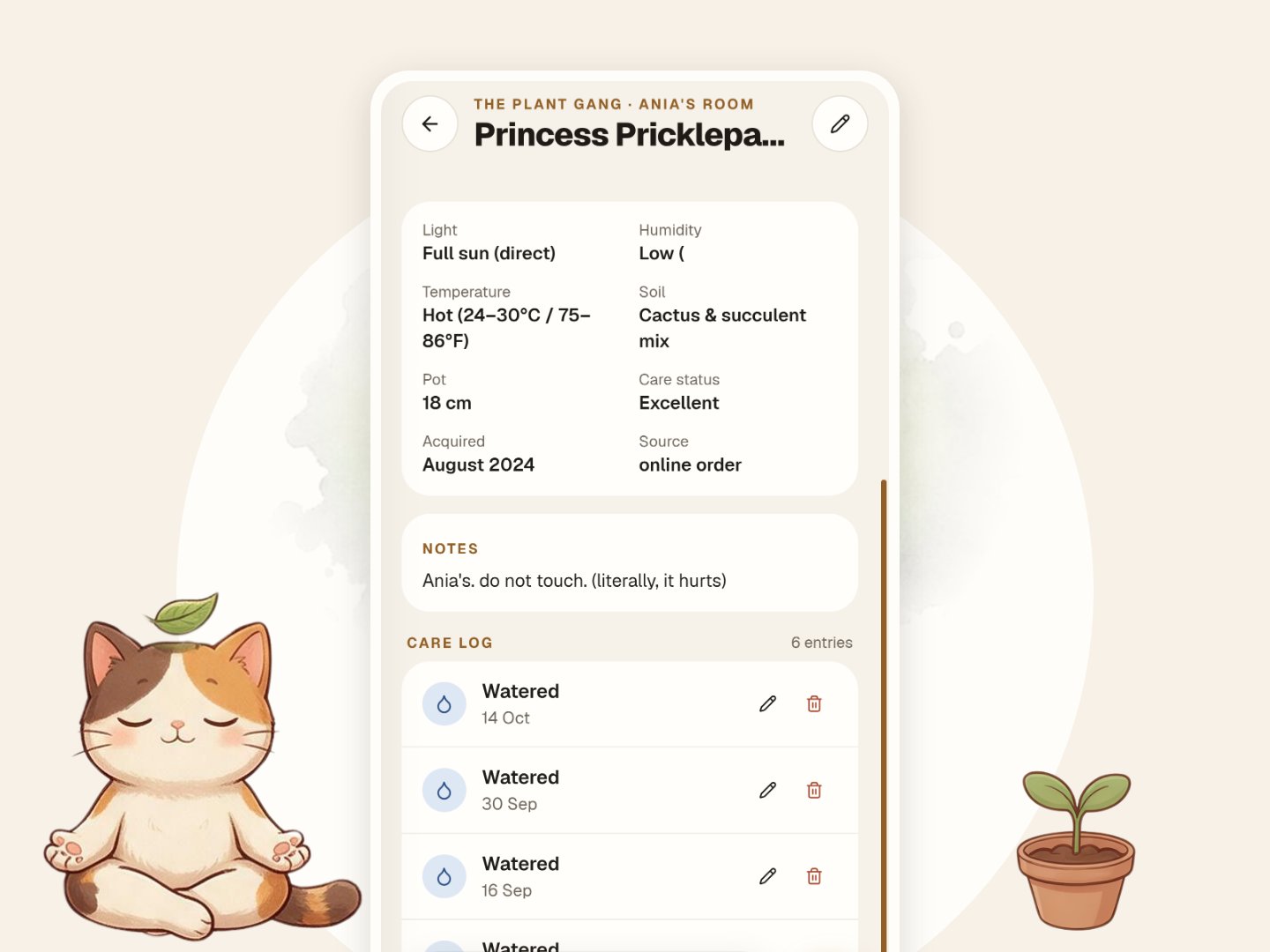
In our flat, the plants live in Klusek's Plant Care. Each plant has its own card with a photo and its details, and its own watering schedule, so the agave and the fern aren't on the same timetable. On watering day, Klusek shows which plants are due, and when you water one, you tick it off.
Those ticks add up to a little care log. In winter that's surprisingly useful: you can see the agave was watered on 16 September, 30 September and 14 October, so there's no "did I already?" moment and no extra splash just in case.
Honestly, Klusek doesn't diagnose diseases or pests. What it does is keep the watering steady and let everyone at home share it, so nobody waters the same plant twice. It's free when you use it on your own; to share your plants with your partner or housemates, one of you needs a Klusek Pass, and the people you invite join for free.
Hang in there, both of you
Winter is a long, quiet stretch for plants, and for a lot of us too. If yours look a bit sleepy, give them light, a lighter hand with the watering can and a bit of patience. Around March, you'll spot a fresh, curled-up leaf, and it'll feel like a small present.