


A monstera in winter needs water roughly every two to three weeks in most homes, and only once the top few centimetres of soil have dried out. That's the short answer to how often to water a monstera in winter. All summer it drank like it had just run a marathon, so the Sunday watering habit makes sense, but by November the soil is often still cold and damp from last week. The soil decides, not the calendar.
How often to water a monstera in winter
A monstera grows much more slowly in winter, because there's less light. A plant that isn't growing much doesn't drink much, so the same pot of soil stays wet for longer. A university greenhouse guide from BYU advises letting the top 2 to 3 inches (5 to 7 cm) dry between waterings, and watering less in autumn and winter.
In practice:
- Warm, bright room: maybe every 10 to 14 days.
- Average room, north-facing window: often every 2 to 3 weeks.
- Cool room: it can be longer than that.
Treat those numbers as a starting point. Check the soil before every watering, and if in doubt, wait a few more days. A monstera forgives being a bit dry much more easily than it forgives sitting in wet soil.
In winter, "it's Sunday" is not a reason to water. "The soil is dry" is.
How much to water a monstera in winter
When it does need water, water properly:
- Use room-temperature water. The RHS suggests bringing water to room temperature, especially in winter. Icy water straight from the tap can chill the roots.
- Water slowly until a little runs out of the bottom. That means the whole root ball got a drink, not just the top.
- Empty the saucer or pot cover after about ten minutes. Standing water is how roots rot.
- Then leave it alone until the top of the soil is dry again.
A deep drink every couple of weeks is much better than a small splash every few days, which keeps the top wet and the bottom guessing.
Monstera yellow leaves in winter
Yellow leaves in winter usually mean one of three things:
- One old, lower leaf going yellow, slowly. Normal. Plants let go of old leaves, more so in a quiet season.
- Several leaves yellowing, with damp soil. Most likely too much water. Let it dry out further than you think, check that the pot drains, and water less often from now on.
- Yellow or brown, crispy patches, with bone-dry soil. Underwatering, or a radiator too close. Give it a proper drink and move it a little away from the heat.
If you're not sure which one you're looking at, our post on whether houseplants are dying in winter or just resting goes through the signs. And if your monstera lives near a radiator, have a look at plants near a radiator too.
How Klusek helps
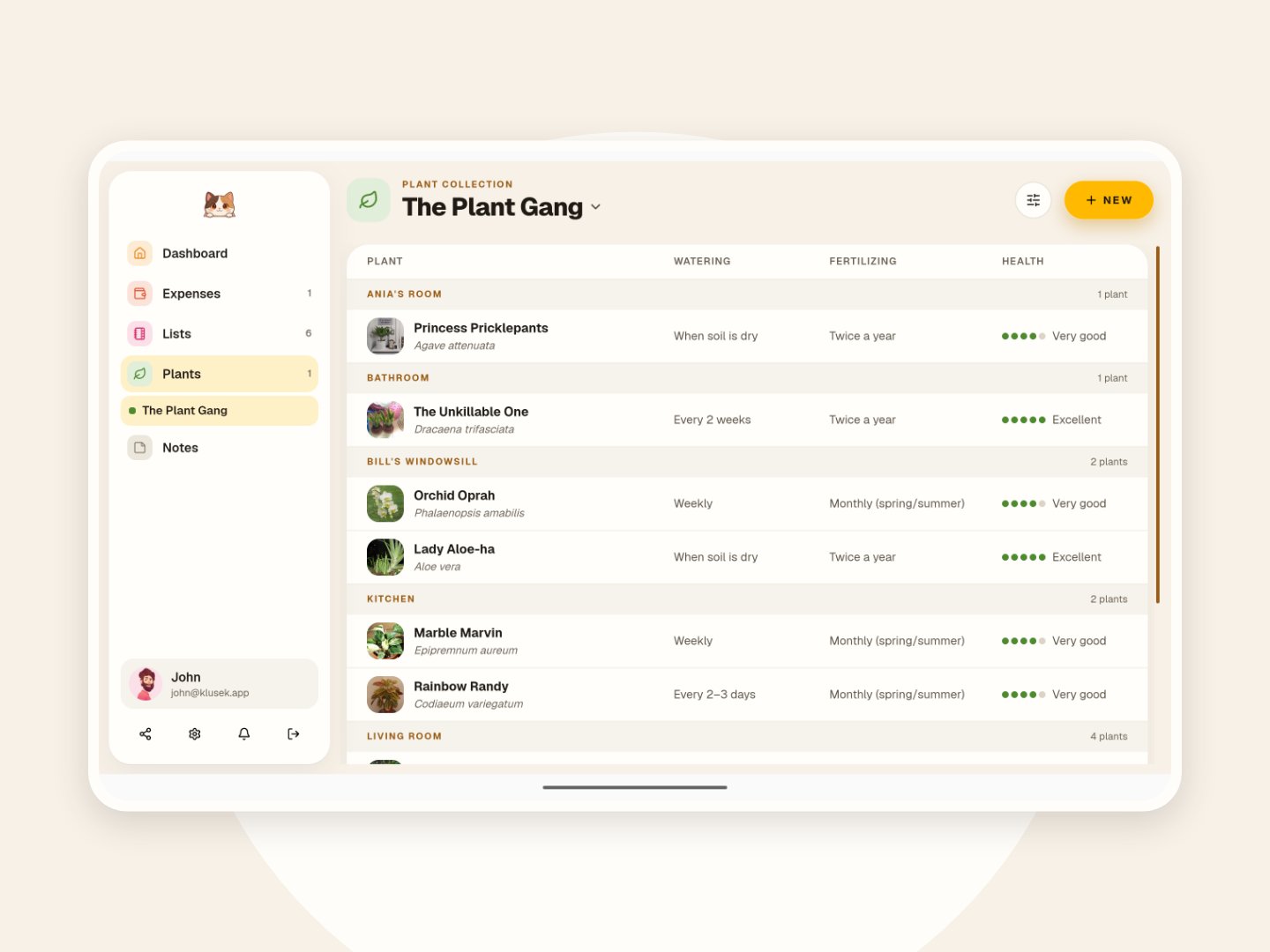
In our flat, every plant has its own watering schedule in Klusek's Plant Care, because they really don't all want the same thing. Some are watered weekly, some every two weeks, and some simply "when soil is dry". Klusek shows which plants are due today when you open it, so in winter you check the soil when a plant comes up as due, rather than when the leaves droop.
Plants are grouped the way your home is, by room, so the kitchen plants and the bedroom ones are easy to find. Your partner or housemate sees the same plants and ticks them off too, so the monstera doesn't get watered twice in one week.
Klusek is free when you use it on your own. To share your plants with the people you live with, one of you needs a Klusek Pass, and the people you invite join for free. If you have a snake plant too, here's how often to water a snake plant in winter.
See you in spring
Your monstera isn't sulking, it's resting. Give it light, a proper drink when the soil asks for one, and some patience. Around March it'll unroll a new leaf, and you'll remember why you fell for it in the first place.