


It's half past three in the afternoon, and the light in your living room has already gone that soft grey that says "put the lamp on". If you're looking for plants for dark rooms in the UK, you're in good company, because a north-facing flat in November is a very British situation. The lovely thing is that plenty of houseplants come from shady forest floors and are perfectly happy without a sunny windowsill.
Here's a short list of the ones that really cope, and a few small habits that help them through the darkest months.
First, how dark is "dark"?
The Royal Horticultural Society has a lovely simple test: if there's enough natural light to read a book by, you can grow a houseplant there (RHS, Houseplants for shady rooms, checked 23 October 2026). A hallway with no window at all is a different story; no plant lives on lamplight alone for long.
So before you buy, stand where the plant will go at midday and open a book. If you can read comfortably, you're fine.
Plants for dark rooms: 10 UK houseplants for low light
These are all easy to find in UK garden centres and supermarkets, and all of them appear on the RHS list of houseplants for shady rooms.
- Cast iron plant (Aspidistra elatior). The Victorians grew it in dark, draughty parlours, which tells you everything. The RHS calls it very tough, and it really is hard to kill in low light.
- ZZ plant (Zamioculcas zamiifolia). Glossy, upright and very relaxed about being forgotten. It stores water in its roots, so it's happy to dry out.
- Snake plant (Sansevieria trifasciata, now often sold as Dracaena). Slow in shade but steady. Water it rarely; our post on how often to water a snake plant in winter has the details.
- Ivy (Hedera helix). The RHS says it tolerates shade and neglect very well. Lovely trailing off a shelf.
- Boston fern (Nephrolepis exaltata). Happy in shade, but thirsty. Water when the compost starts to dry out. A bathroom with a small window suits it.
- Peace lily (Spathiphyllum). Tells you when it's thirsty by drooping, then perks up within hours of a drink. Very honest plant.
- Chinese evergreen (Aglaonema). Silvery patterned leaves that brighten a dim corner.
- Spider plant (Chlorophytum comosum). Copes with lower light, though it grows faster with more. Its babies make easy presents.
- Prayer plant (Maranta leuconeura). Leaves fold up at night, which is strangely charming. Likes steady warmth and moist compost.
- Heartleaf philodendron (Philodendron scandens). A soft trailing plant that's very forgiving in a shady room.
You might expect pothos on this list, and it is on the RHS page, but they note it's less shade-tolerant than aspidistras or ivies. Give it your brightest dim spot, not your darkest.
A dark room doesn't need a special plant. It needs a patient one, and a person who waters a little less.
Hard to kill houseplants for low light
If you're new to plants, or you've lost a few and you're feeling a bit unlucky, start with the toughest three: cast iron plant, ZZ plant and snake plant. They forgive a missed week, a dim corner and a cold-ish room. Once those are thriving, add a fern or a peace lily for something softer.
How to water plants in a dark room
This is where most low-light plants get into trouble. As the RHS puts it, lower light levels mean plants don't dry out as quickly. In a north-facing flat in winter, compost can stay damp for a long time.
- Check before you water. Push a finger in. If it's still damp a couple of centimetres down, wait.
- Water less often, not less thoroughly. When you do water, water properly and let it drain.
- Empty the saucer. Roots sitting in water in a cool, dim room is the quickest way to lose a plant. If you're unsure, our guide to the signs of overwatering helps.
- Dust the leaves. In low light every bit of light counts. A damp cloth once a month makes a real difference.
- Turn the pot now and then. So it doesn't lean towards the window like it's trying to leave.
Our post on how often to water houseplants in winter goes into more detail for the cold months.
Low light plants that are safe for cats and dogs
If you share your flat with a curious cat, check each plant before you bring it home. According to the ASPCA's plant database, the cast iron plant and the spider plant are non-toxic to cats and dogs, while golden pothos and the peace lily are listed as toxic (all checked 23 October 2026). For anything else, look it up in the ASPCA list before you buy, and keep trailing plants out of paw's reach anyway.
How Klusek helps us with this
In our flat, the plants in the darker rooms are the ones we're most tempted to overwater, because they look a bit sleepy and you want to help. So each one has its own watering rhythm in Klusek's Plant Care, and the shady ones simply get a longer gap between drinks.
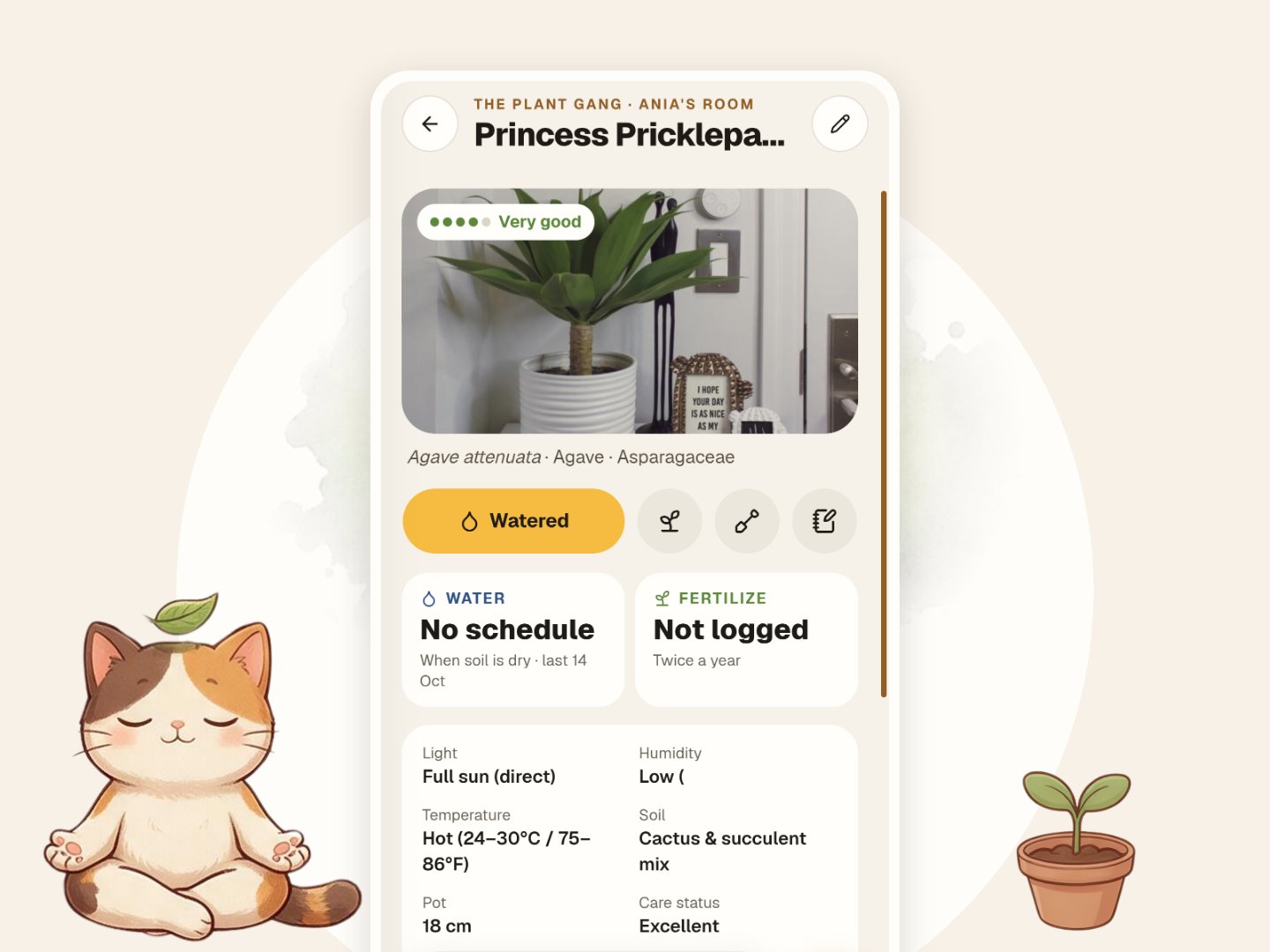
Each plant's page keeps what it needs at a glance: its light, humidity, soil and pot size, plus when it was last watered. That's handy before you move a plant around the flat. If the page says "full sun", like the agave in the picture, it's not going in the hallway, however nice it would look there.
Plant Care is free when you use it on your own. To share the watering with a partner or flatmate, one of you needs a Klusek Pass, and they join for free.
Your shady corner can be green
A north-facing flat isn't a plant-free flat. It just asks for slower plants and a lighter hand with the watering can. Start with one tough one, see how it settles in over the winter, and by spring you'll know exactly which corner it loves most.