

You water your plants every Saturday, faithfully, because you love them. Then one morning in November the peace lily looks droopy, a leaf or two has gone yellow, and there's a soft white fluff on top of the soil. The most common overwatering signs in winter are exactly these: yellowing leaves, soil that stays wet for days, mould on the surface and little flies around the pot. The love is real. The plant just can't drink that much while the days are short.
Why overwatering happens in winter
In winter, plants get less light, so they grow less and use much less water. The RHS puts it plainly: with lower light and lower temperatures, plants grow less, so they need less water. The soil stays wet much longer after each watering, and if we keep the summer routine, the roots end up sitting in water. Roots need air as well as water, and soggy roots start to rot.
Overwatering signs to look for
Most of these show up in the soil and the leaves at the same time:
- Yellow leaves, several at once, often the lower ones first, soft rather than crispy. The RHS lists yellowing leaves that drop as a possible sign of overwatering.
- Soil that's still wet a week after watering, or feels heavy when you lift the pot.
- Drooping or wilting while the soil is wet. It looks thirsty, but the damaged roots can't take up water.
- A soft, dark stem base or a sour, musty smell from the pot.
- White mould on the plant soil. A fluffy or powdery layer on top.
- Little flies around the pot. Fungus gnats breed in damp compost.
- Brown, mushy patches on leaves, sometimes with a yellow edge.
Wilting with wet soil is the clearest clue. More water is the one thing that won't help.
Overwatering vs underwatering leaves
They can look alike from across the room, so feel the soil and the leaves:
- Overwatered: leaves yellow and soft or limp, soil damp, maybe a smell, maybe flies.
- Underwatered: leaves crispy, with brown dry edges or tips, curling, soil bone dry and pulling away from the side of the pot. The RHS lists brown leaf edges as a possible sign of underwatering.
In winter, crispy edges can also come from dry air or a radiator, even if the soil is fine. Our post on plants near a radiator covers that one.
White mould on plant soil: should you worry?
Usually not much. That white fuzz is normally a harmless fungus that lives on damp organic matter in the compost. Master gardener and extension answers tend to describe it as more of a symptom than a disease: the soil is staying too wet, or the pot isn't draining well.
To deal with it, scrape off the mouldy top layer, let the soil dry out more between waterings, and make sure the pot has drainage holes and isn't standing in water. If it keeps coming back, fresh compost in spring helps.
If you've spotted little flies too, our guide to fungus gnats in winter goes through the four-week fix.
How to save an overwatered plant
- Stop watering. Let the top few centimetres dry out completely before you water again.
- Empty saucers and pot covers. Never leave a pot standing in water.
- Move it somewhere bright, away from cold windows and away from the radiator, so it can use what it has.
- Check the roots if it's really struggling. Ease it out of the pot. Healthy roots are firm and pale; rotten ones are brown, mushy and smell. Snip off the rotten ones and repot in fresh, dry-ish compost, in a pot with drainage.
- Be patient. A plant that's been waterlogged takes weeks to recover. Don't feed it until it's growing again, usually in spring.
If you're not sure whether a quiet plant is in trouble or just resting, our post on houseplants dying in winter helps you tell the difference.
How Klusek helps
Overwatering in winter almost always comes from watering on a routine, not on need. In our flat, the plants live in Klusek's Plant Care, and each one has its own watering schedule, so the aloe and the orchid aren't on the same timetable. Klusek shows which plants are due today when you open it, and that's the moment to check the soil.
Plants are grouped the way your home is, by room, each with its photo and name, so a quick look in the morning shows the whole collection. Anyone you share it with sees the same plants and ticks them off when they water, so nobody gives the fern a second drink because they weren't sure.
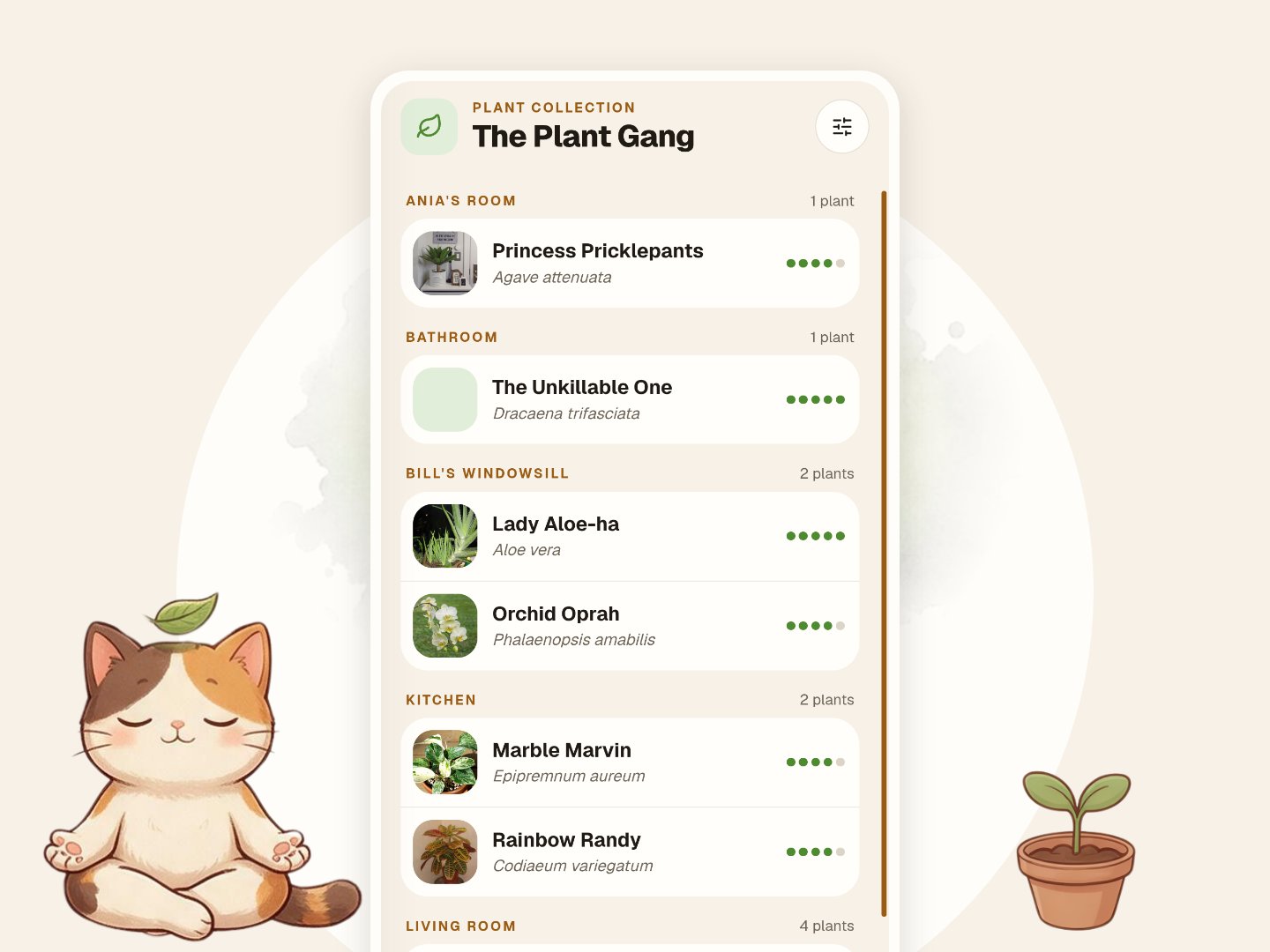
Klusek doesn't diagnose plant diseases or pests. It keeps the watering steady and shared. It's free when you use it on your own; to share your plants with your partner or housemates, one of you needs a Klusek Pass, and the people you invite join for free.
Go easy on yourself
If you've overwatered a plant, it's because you cared about it. Nearly everyone who keeps plants has done it, usually in their first winter. Let the soil dry, give it light, and wait. Most plants are tougher than they look, and spring is on your side.