


Isn't it too cold for flies? Outside, yes. But the heating's on, there's frost on the car, and a tiny black fly is drifting slowly across your laptop screen, with another one near the window. Fungus gnats in winter feel unfair, yet your warm flat and damp plant pots make a perfect little home for them, and winter watering habits often make it even cosier.
The good news: they're harmless to you, mostly harmless to healthy plants, and very fixable. It just takes a few weeks of patience.
Do fungus gnats die in winter?
Outdoors, the cold slows them right down. Indoors, nothing tells them it's winter. Your home is warm all season, and the soil in your pots stays moist, so they carry on breeding happily from November to March.
Why they often get worse in winter:
- Plants drink less, because there's less light, so the soil stays wet for longer after each watering. Gnat larvae love wet soil.
- We keep watering on the summer schedule, out of habit and love.
- Plants that summered outside come back indoors in autumn, sometimes bringing a few gnats with them. The insect lab at the University of Wisconsin–Madison names this as one of the commonest sources.
- Fallen leaves on the soil give them even more to feed on.
What fungus gnats actually are
The adults are tiny, dark, slightly clumsy flies, often seen near pots or windows. They don't bite and they don't eat your plants. The larvae live in the top layer of the soil and mostly feed on fungi and decaying bits in damp compost. In a heavy infestation, they can nibble fine roots, which matters more for seedlings and young plants than for a big, healthy pothos.
So they're mostly a nuisance and a sign. A sign that the soil is staying wetter than your plant needs.
Fungus gnats are the soil's way of saying "you're watering me a bit too much".
How to get rid of fungus gnats in houseplants
Give it about four weeks, because you need to break the life cycle and some eggs will still be hatching after you start.
- Let the soil dry out. This is the big one. Extension services agree that cutting back on watering is often the single most important step. Let the top few centimetres dry completely before you water again, and empty the saucer after watering.
- Water from the bottom for a while. Stand the pot in a bowl of water for about 20 minutes, then let it drain. The roots drink and the top of the soil stays drier, which the larvae hate.
- Put up yellow sticky traps. They catch the adults and show you how bad it is, and whether it's improving. On their own, they won't solve it, because the larvae are in the soil.
- Treat the soil with Bti. Products with Bacillus thuringiensis israelensis (sold as mosquito bits or dunks) kill the larvae and are a common, gentle option. Follow the label, and expect it to take a few weeks.
- Clear the soil surface. Pick off fallen leaves and old flowers. If the top layer is very damp and full of larvae, scrape off a centimetre or two and replace it with fresh compost.
- Check new plants. Keep a new plant on its own for a couple of weeks before it joins the others.
A little trick from North Dakota State University: put a slice of raw potato on the soil for a day or two. If larvae gather underneath, you've found the culprit pot.
Sprays aimed at the flying adults don't help much. The UW–Madison lab notes that targeting the adults only gives temporary relief, because the next generation is already in the soil.
How to stop them coming back
Once they're gone, keeping them away is mostly about watering:
- Water less often in winter, and always check the soil first. Our guide on how often to water houseplants in winter goes through it.
- Use pots with drainage holes, and don't leave water standing in the saucer.
- Use fresh, bagged compost when you repot in spring.
If your plants also have yellow leaves or a bit of white fluff on the soil, that's usually the same story of too much water. Our post on whether your houseplants are dying in winter, or just resting helps sort out what's normal. And if one of yours is a monstera, here's how often to water a monstera in winter.
How Klusek helps
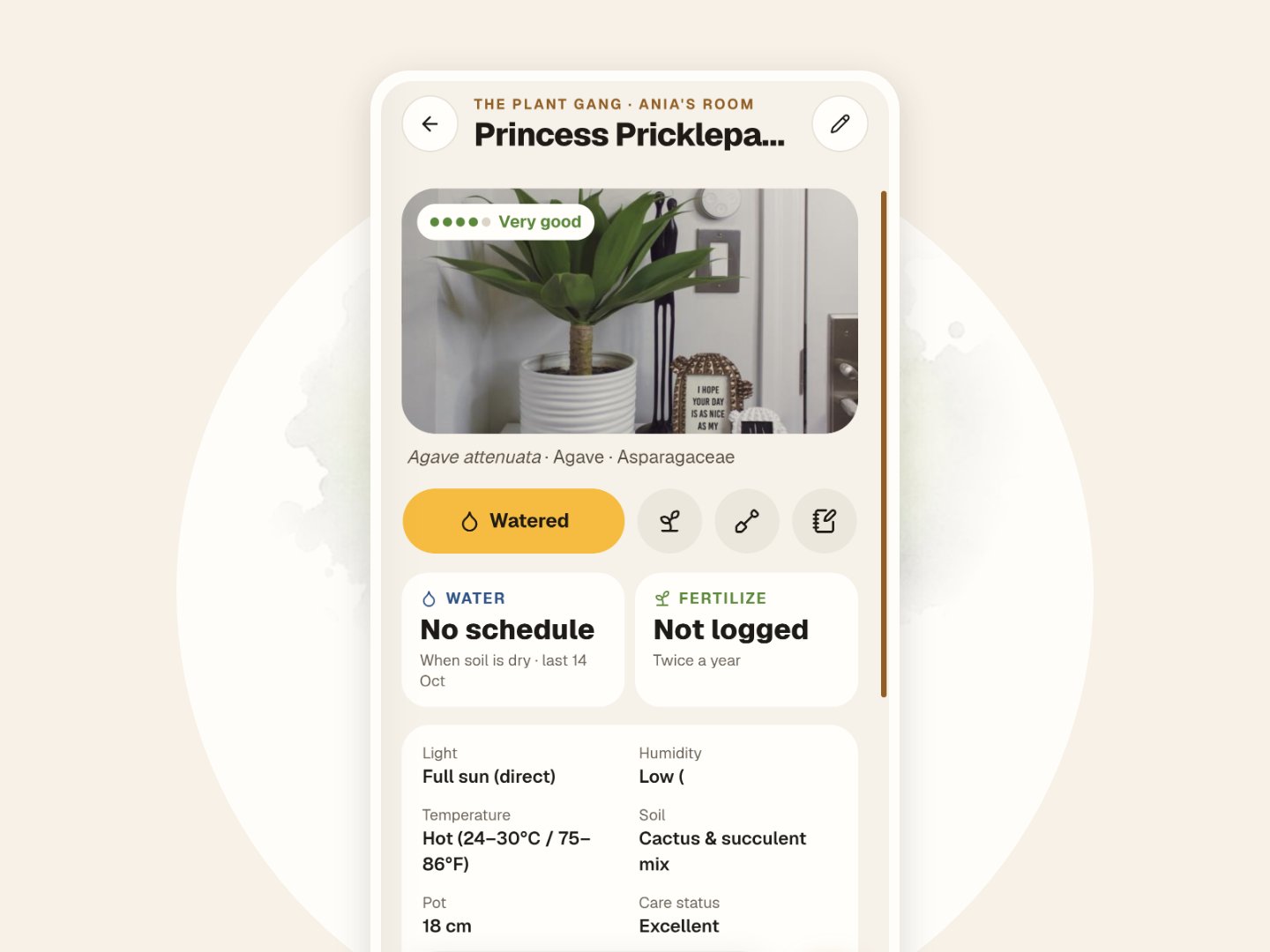
Klusek doesn't diagnose pests, so it won't tell you there are gnats. What it does help with is the cause. In our flat, every plant has its own watering schedule in Klusek's Plant Care, and some plants are simply set to "when soil is dry". The plant's page shows when it was last watered, so on a grey morning you can see it was only last week and leave the watering can where it is.
One big yellow "Watered" button ticks it off, and anyone you share your plants with sees it too, so a well-meaning partner doesn't give it a second drink the same day.
Klusek is free when you use it on your own. To share your plants with the people you live with, one of you needs a Klusek Pass, and the people you invite join for free.
A few weeks, then peace
It's a bit annoying while it lasts, but fungus gnats are one of the most fixable plant problems there is. Dry soil, a few sticky traps and some patience, and by Christmas the only thing flying around your living room should be the wrapping paper.